Sixteen hundred stone cones on two hillsides — and the half hour after the day trippers leave, which is the whole reason to sleep here.
VisitedYes — in person
Trip date19–20 September 2026
We paid€140.40 for the night
Sections covered6
We Slept in a Trullo, and That Is the Whole Point
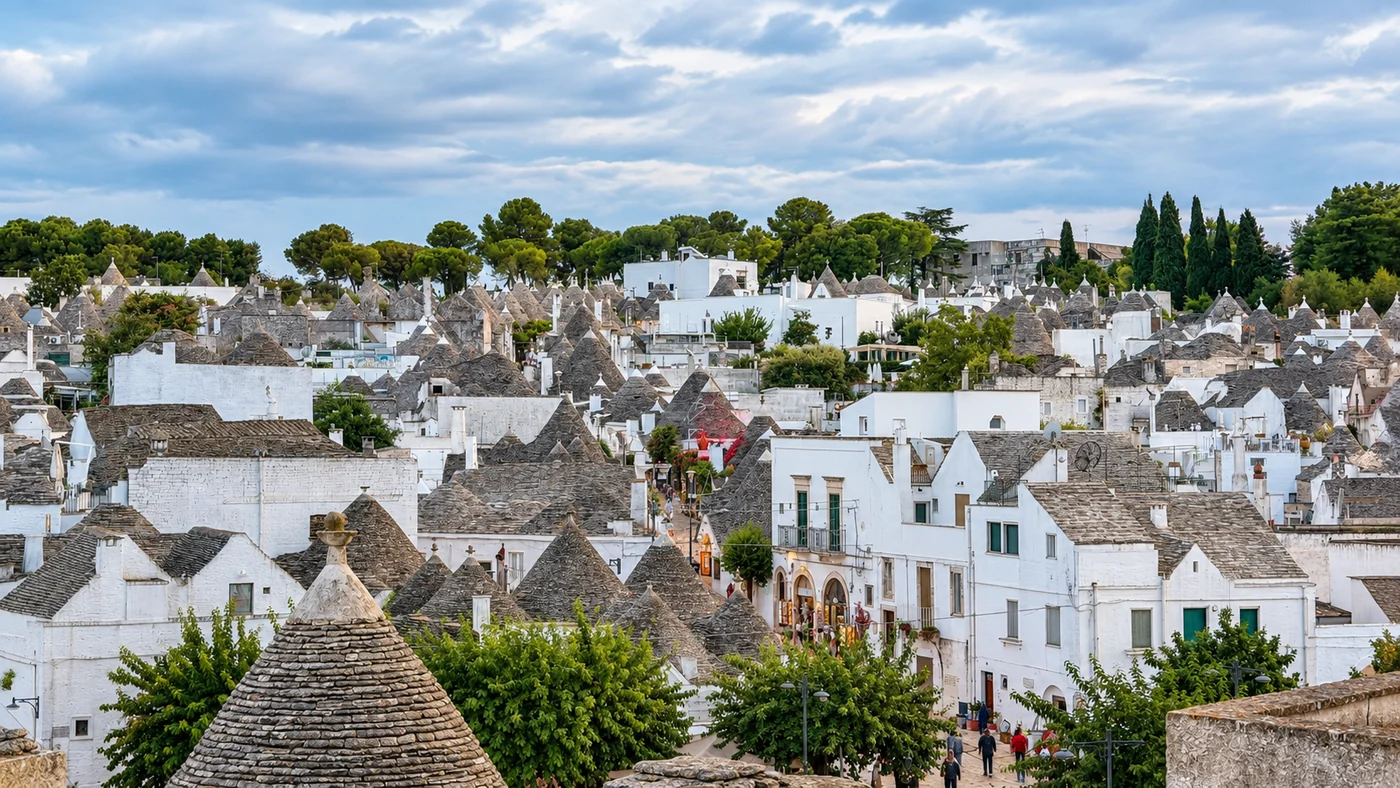
Alberobello is a town of more than sixteen hundred trulli — dry-stone houses with conical slate roofs, whitewashed, packed up two hillsides. It is a UNESCO World Heritage Site and it is unmistakably a tourist town, and both of those things are true at once. What makes it work is staying the night.
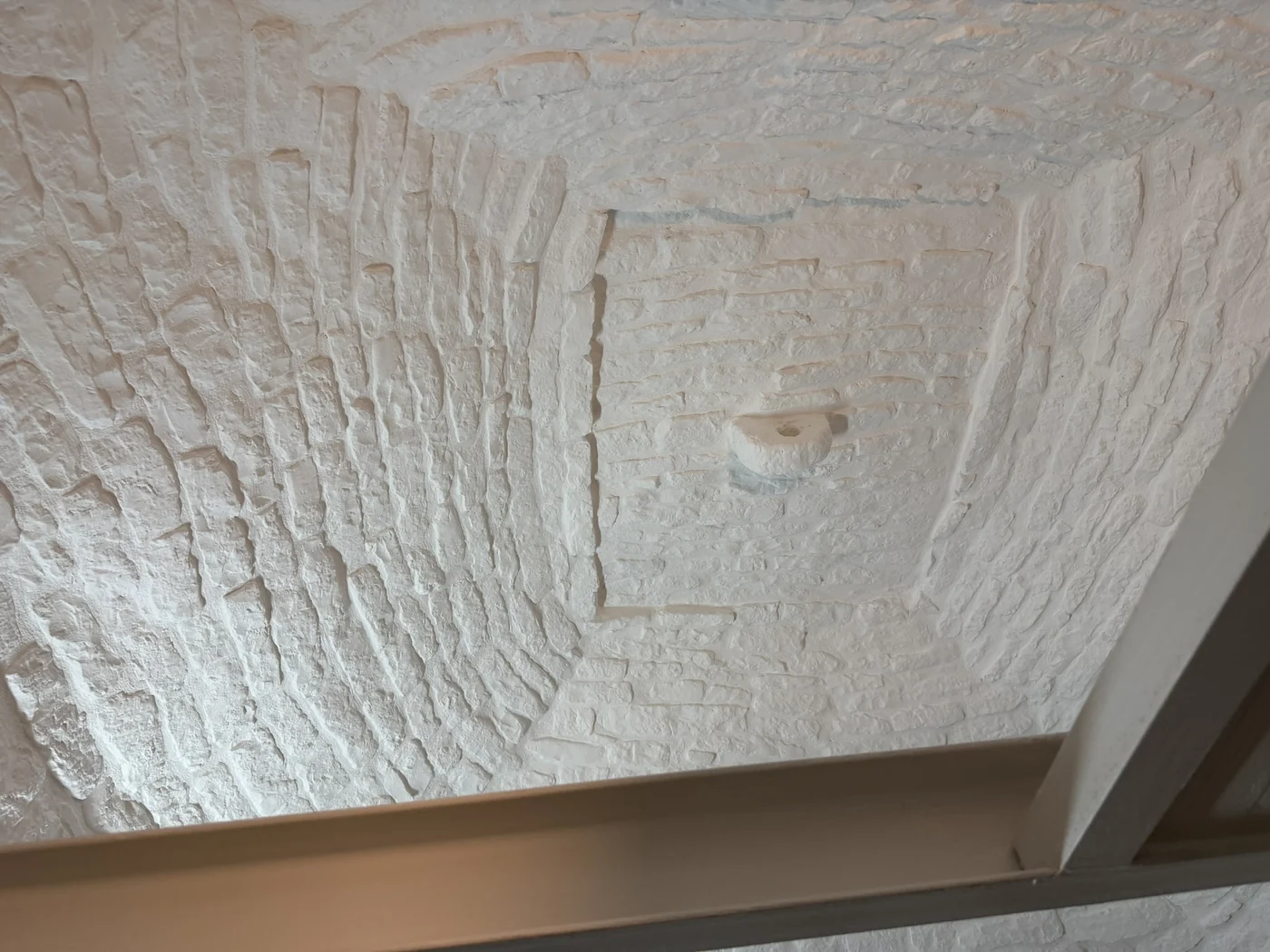
We arrived at a quarter past five on 19 September, straight from Polignano, and the first photograph of the evening is the inside of a trullo roof: a whitewashed cone of dry stone rising to a point. We paid €140.40 for the night.
The reason to sleep here is simple. The day visitors come by coach, fill the lanes through the middle of the day, and leave. By early evening the town empties, the light goes gold and then blue, the lamps come on between the cones, and you have the place more or less to yourself. Every photograph further down this page was taken after six.
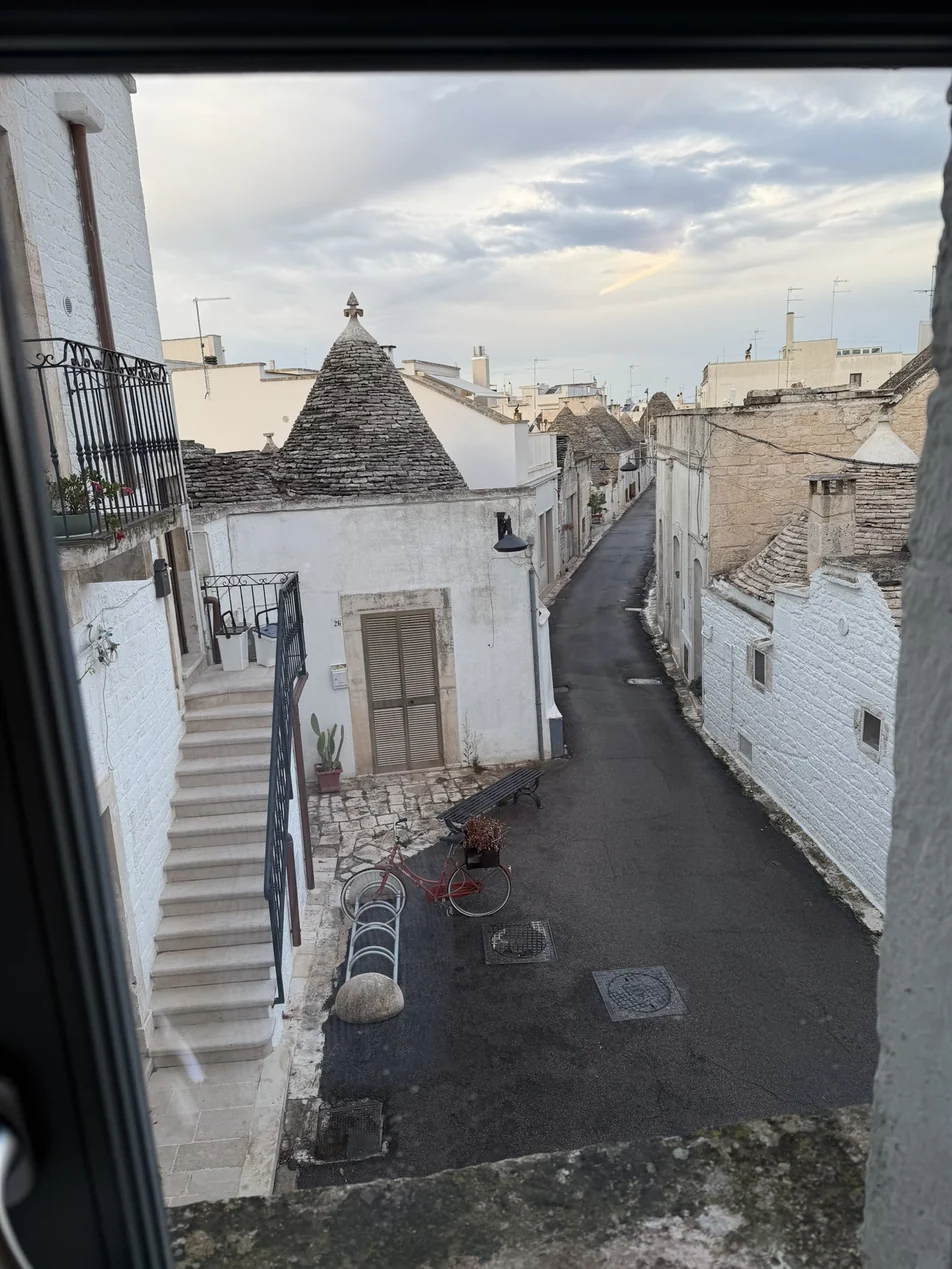
Under a trullo roof, 17:15.The view out, an hour later.
WhereValle d'Itria, inland from the coast. About 50 minutes from Bari airport.
We paid€140.40 for one night, 19–20 September 2026.
AllowAn evening and a morning. One night is enough, and it is the right amount.
Best timeAfter six, when the coaches have gone.
We stayed hereOne night, 19–20 September 2026.
Rione Monti and Rione Aia Piccola: The Two Quarters
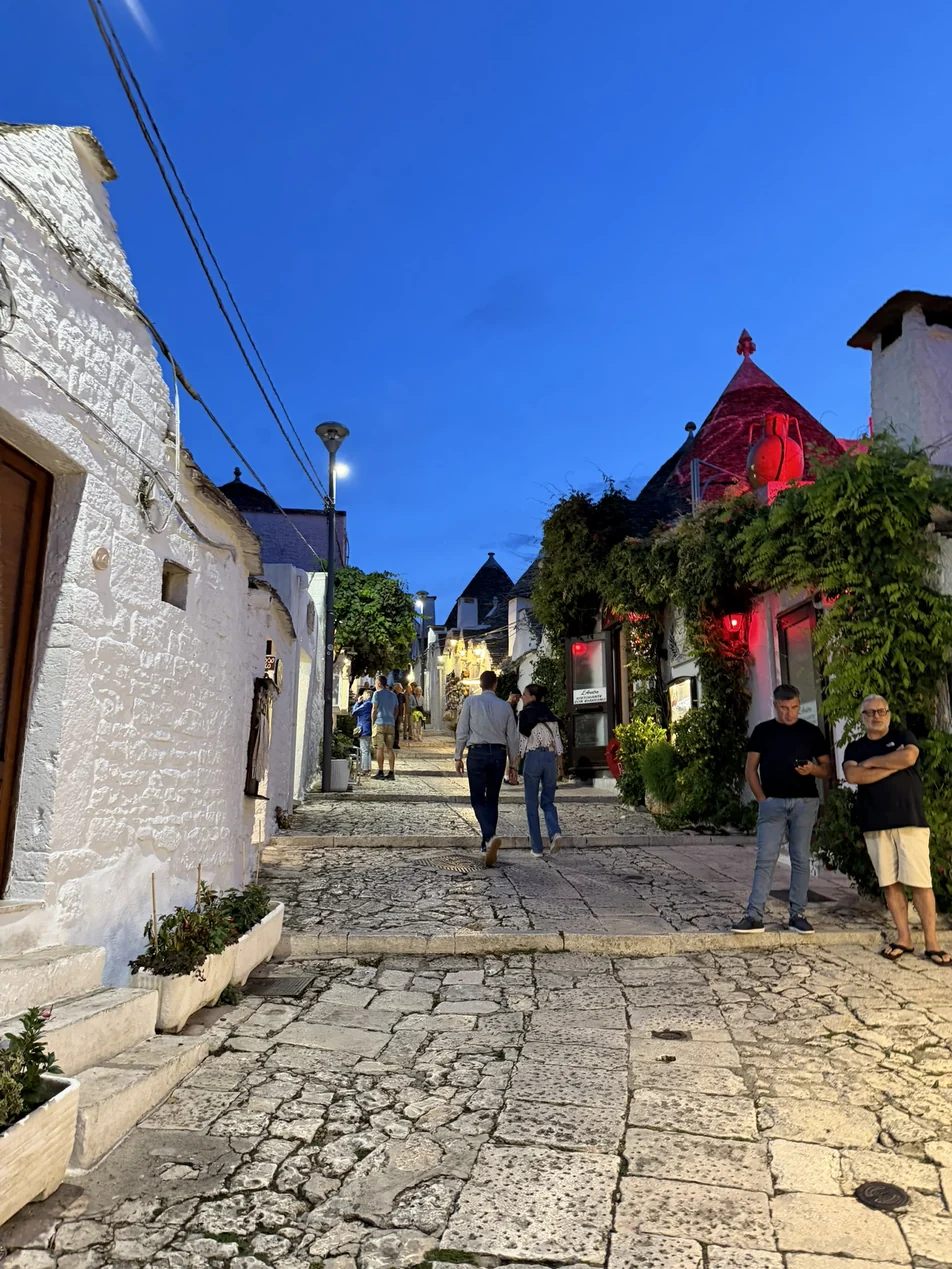
The trulli are concentrated in two districts, and Rione Monti is the big one — a hillside of white lanes climbing between hundreds of cones, most of them now shops, some of them still houses. It is steep, it is cobbled, and it is genuinely beautiful in the evening once the crowds thin.
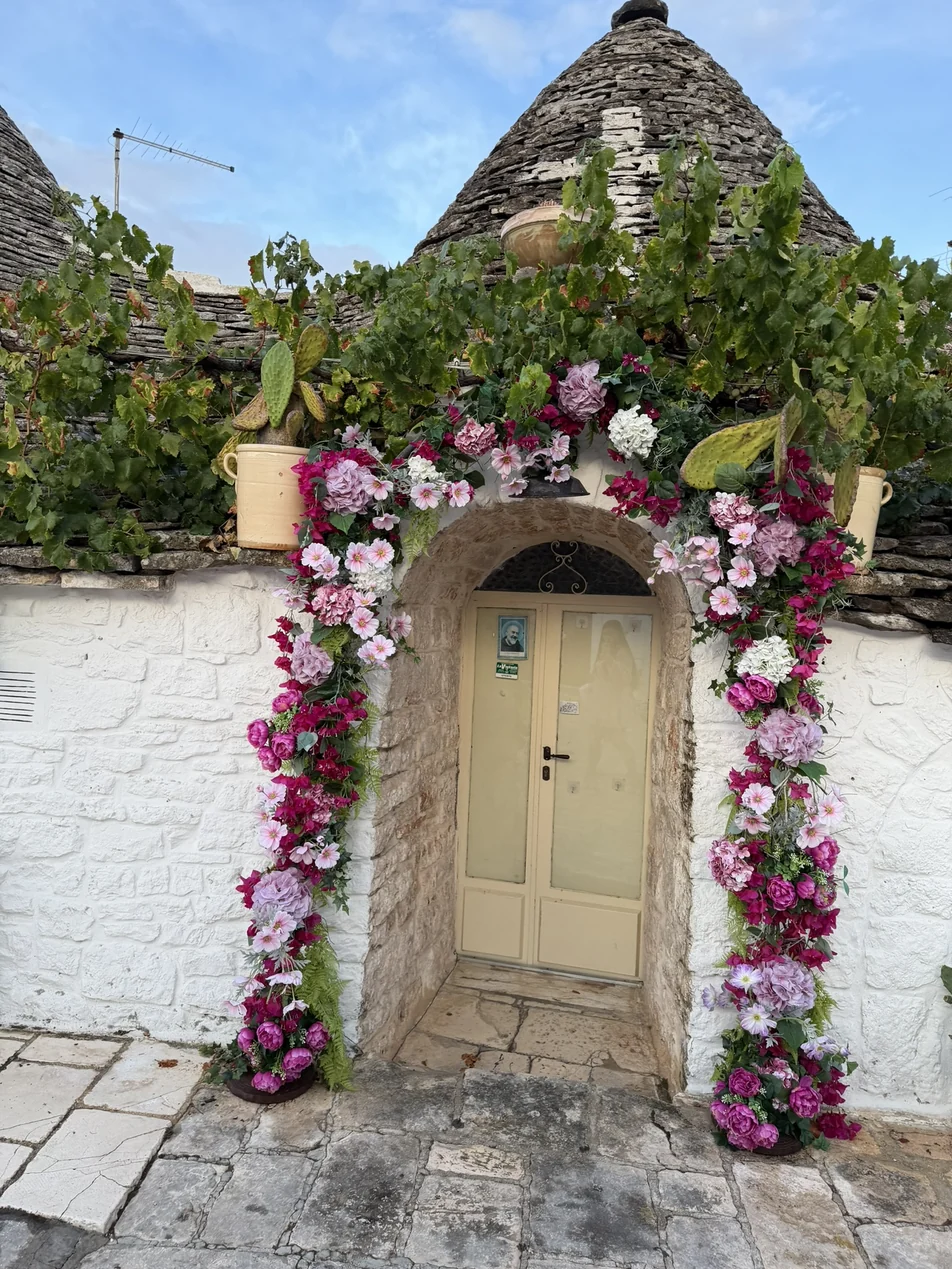
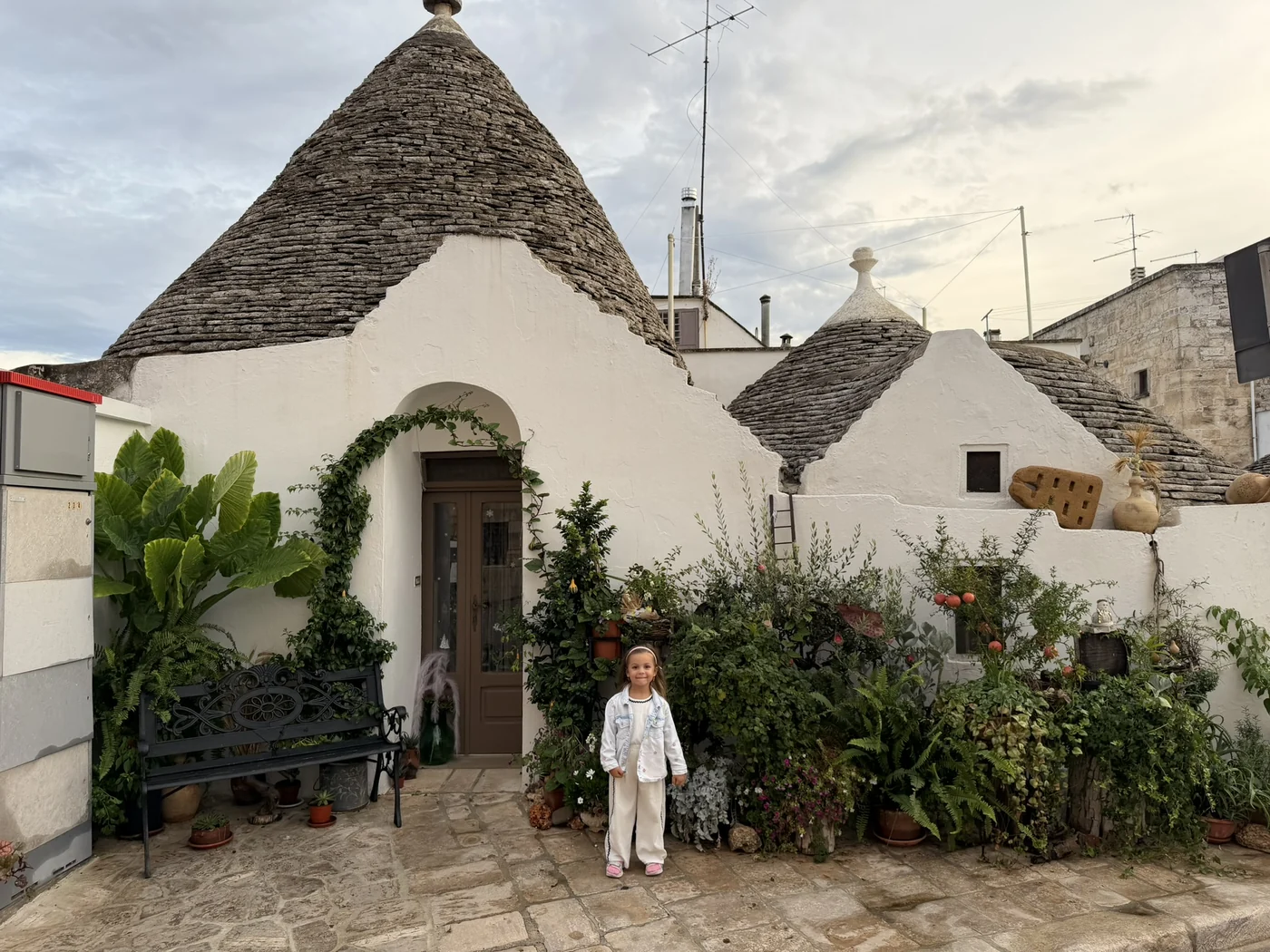
You do not need a route. The lanes all run up or down the same hill and you cannot really get lost. What repays attention is the detail: the mortarless roofs built up in overlapping rings of limestone, the painted symbols on some of the cones, the doorways dressed with flowers, and the small walled gardens that open off the lanes. Most of the trulli here are shops now, so you can walk straight into them and look at the roof from underneath.
The other quarter is Rione Aia Piccola, and it is the one to walk second. It is smaller, quieter, far less commercial, and people still live in it — which is the point. Rione Monti shows you what a trulli district looks like; Aia Piccola shows you one still being lived in rather than sold. Ten minutes across it is enough to feel the difference.
Two things worth going inside. The Trullo Sovrano, just north of the main church, is the only trullo built with two livable floors — put up around 1797 for a priest's wealthy family and now a small museum (alberobello.com) — so it is the one place you can see how the structure works above head height. And there is a panoramic viewpoint over the roofs — it was on our plan for sunset — the view of the whole hillside of cones that every photograph of Alberobello is taken from. Go up there for the last of the light, then come down into the lanes once the lamps are on.
A dressed doorway in Rione Monti, 18:13.A planted garden off the lane, 18:30.
A word about the shops. Most of the trulli on the main lanes sell something — ceramics, linens, liqueurs, fridge magnets. That is the trade-off of a town this famous, and it does not spoil the walk, but the quieter streets one row back are where the place still feels lived in.
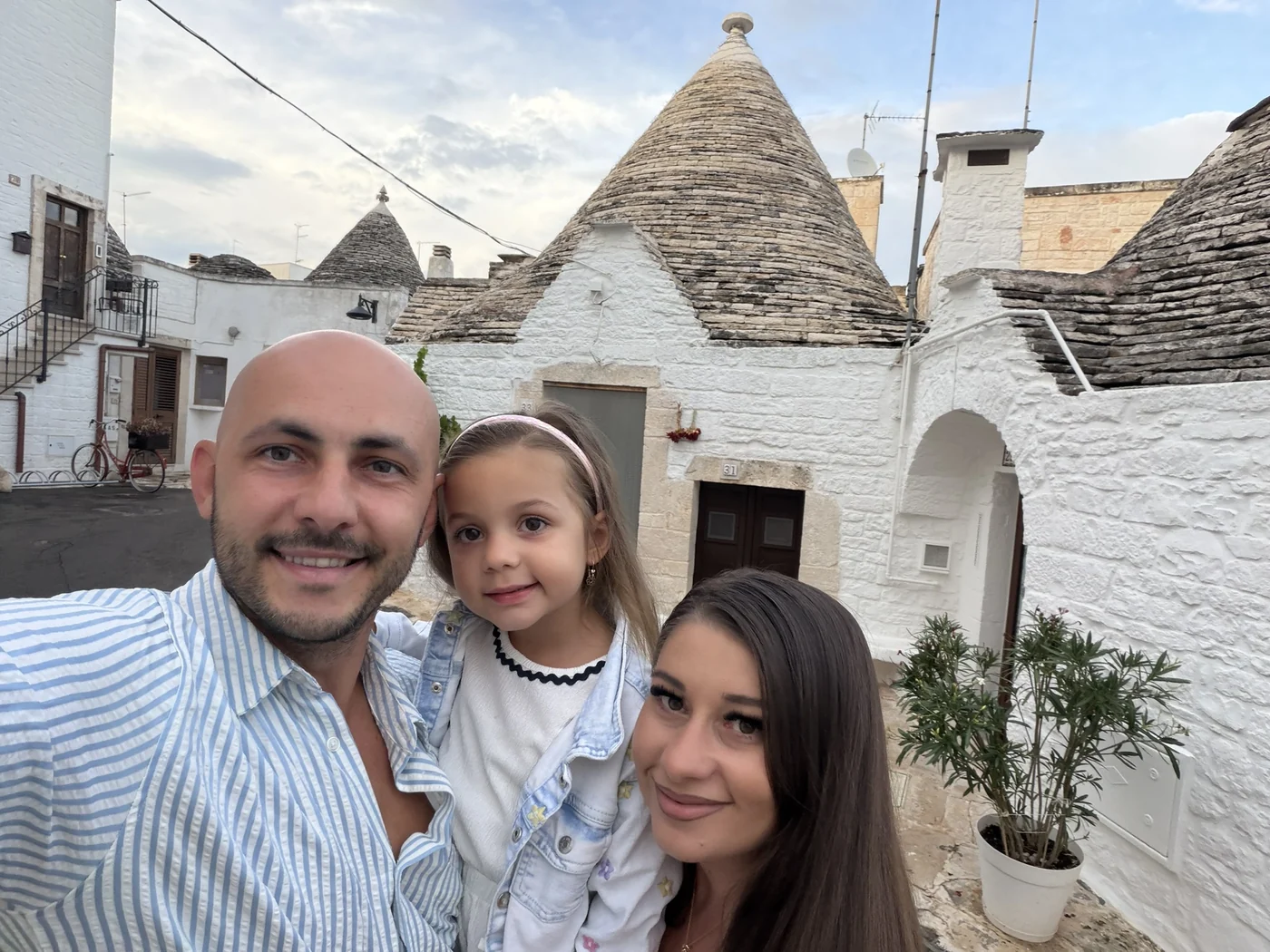
In the lanes at 18:11.
The two quartersRione Monti, the big commercial slope; Rione Aia Piccola, quieter and still lived in.
Go insideTrullo Sovrano — the only two-storey trullo, kept as a museum.
FreeYes — it is the town, you just walk into it.
UnderfootSteep cobbles. Not a pushchair town.
Best timeEarly evening, for the light and the quiet.
We wentFreeWalked 18:06–18:30, 19 September 2026.
A Church Built as a Trullo, and a Basilica That Is Not
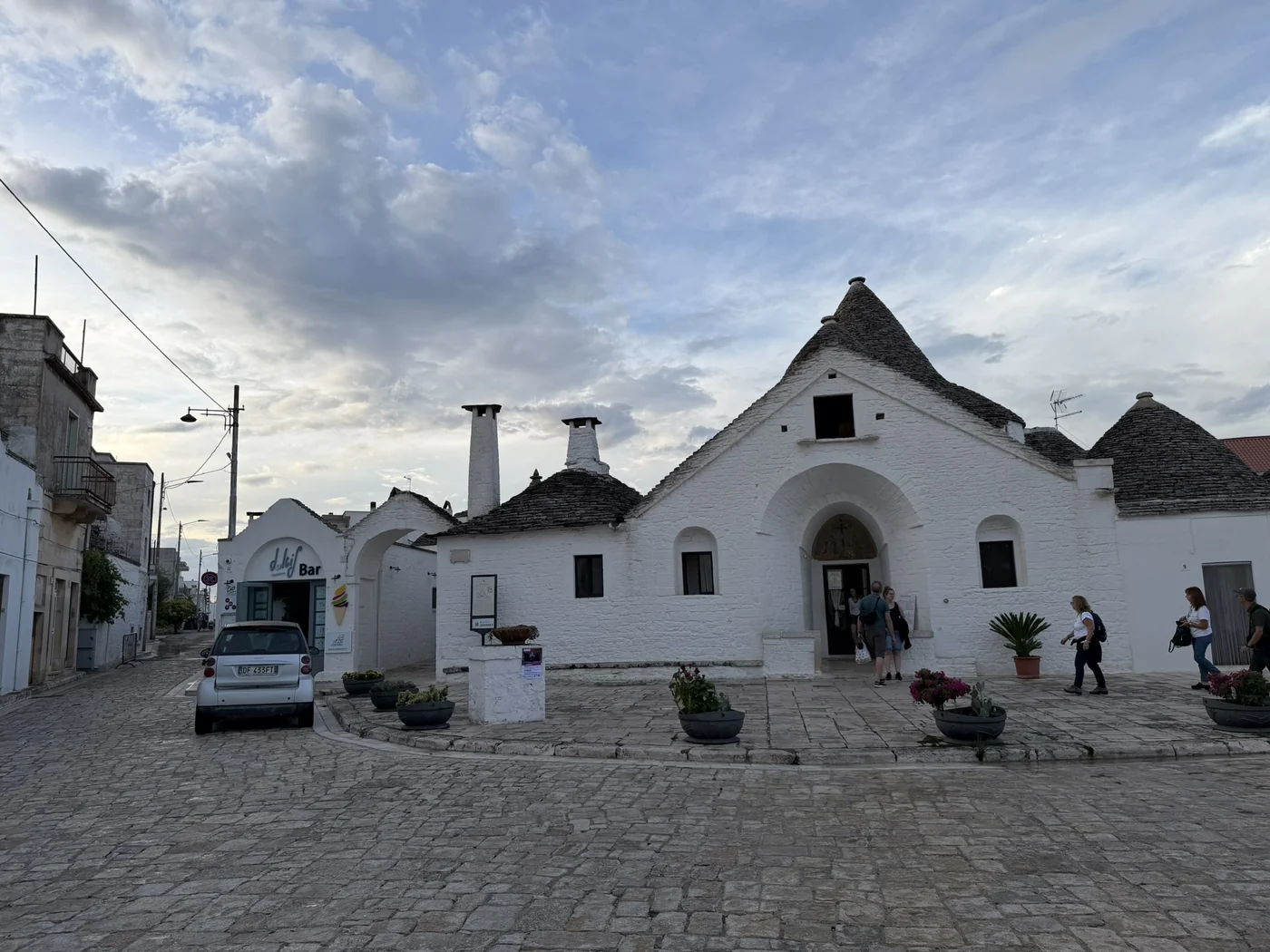
Alberobello has two churches worth five minutes each, and they could not be less alike. The first is a trullo itself — a church built in the same dry-stone cones as the houses around it, with a rose window set into the white gable and a cone where a dome would be. It sits at the top of Rione Monti, and climbing to it is the natural end of the walk up.
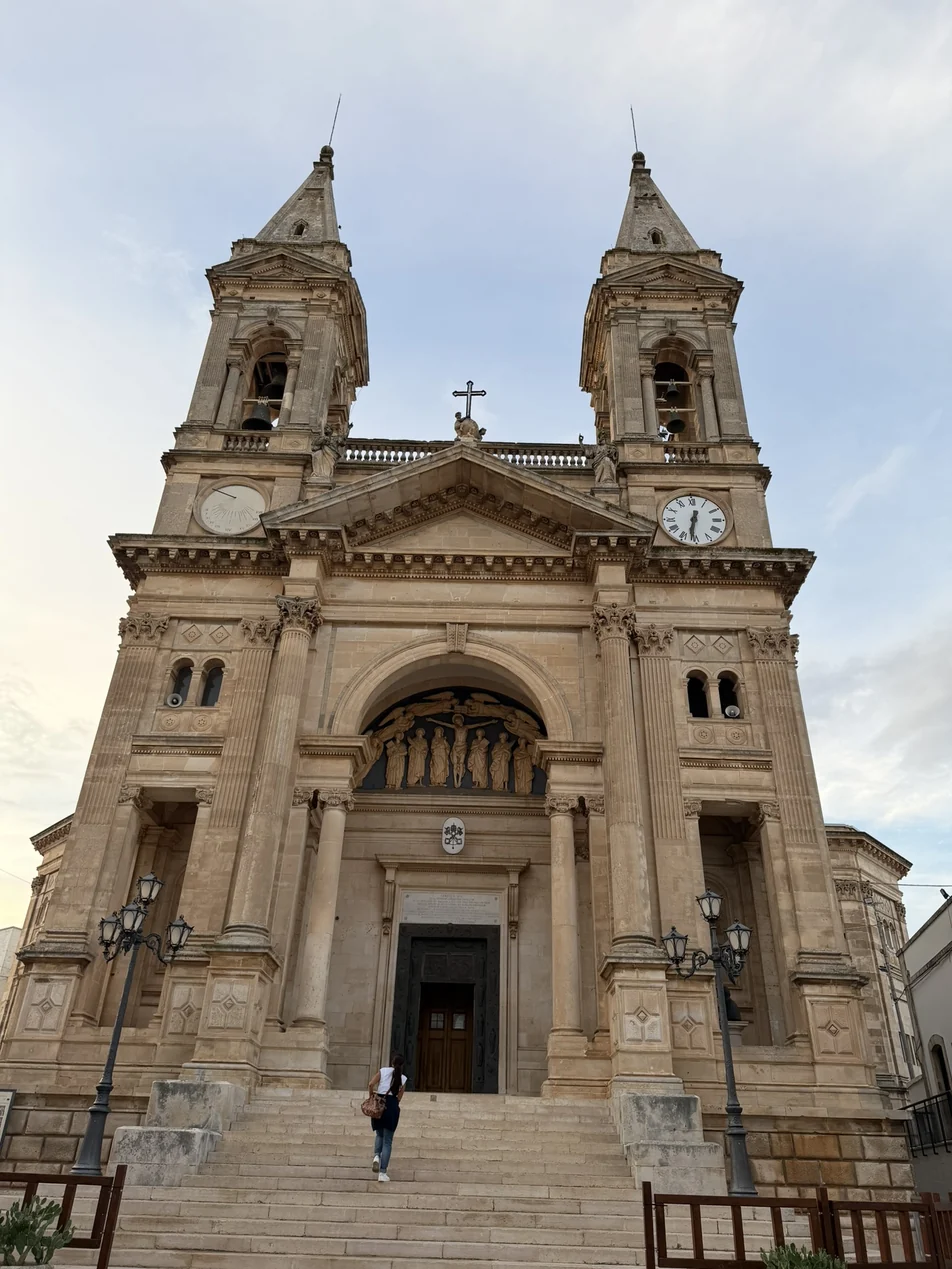
The second is the Basilica dei Santi Medici Cosma e Damiano, the parish church, and it is a conventional basilica with twin bell towers and a clock. After an hour among the cones it looks almost startlingly ordinary, which is rather the point: this is what the town built when it could build whatever it liked.
The trullo church at the top of the hill, 18:13.The Basilica dei Santi Medici, 18:32.
The trullo churchAt the top of Rione Monti. Built in the same cones as the houses.
The basilicaSanti Medici Cosma e Damiano, the parish church. Twin towers, clock.
CostFree to enter.
AllowFive or ten minutes each.
We wentFreePhotographed 18:13 and 18:32, 19 September 2026.
Where the Town Sits Down
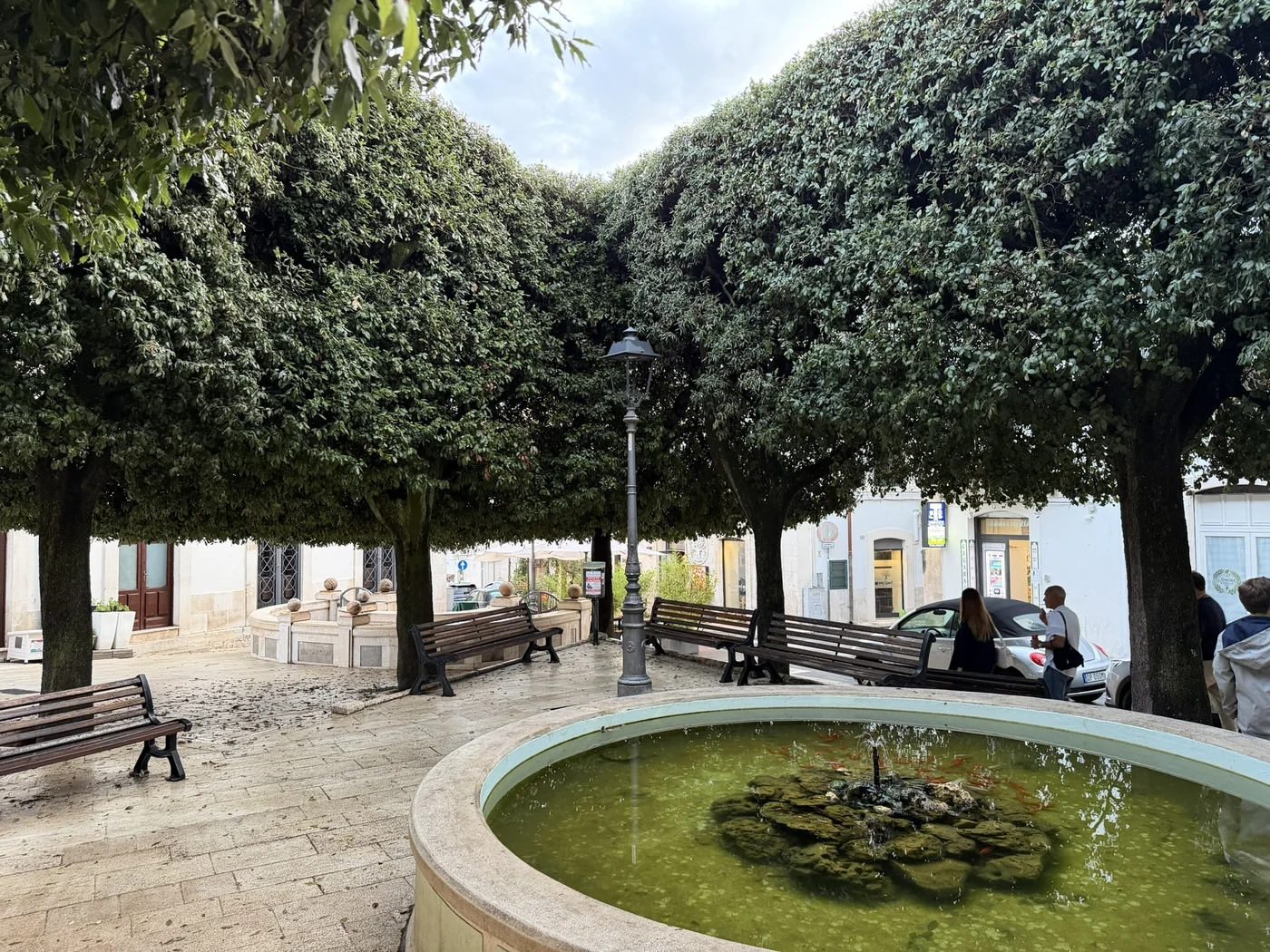
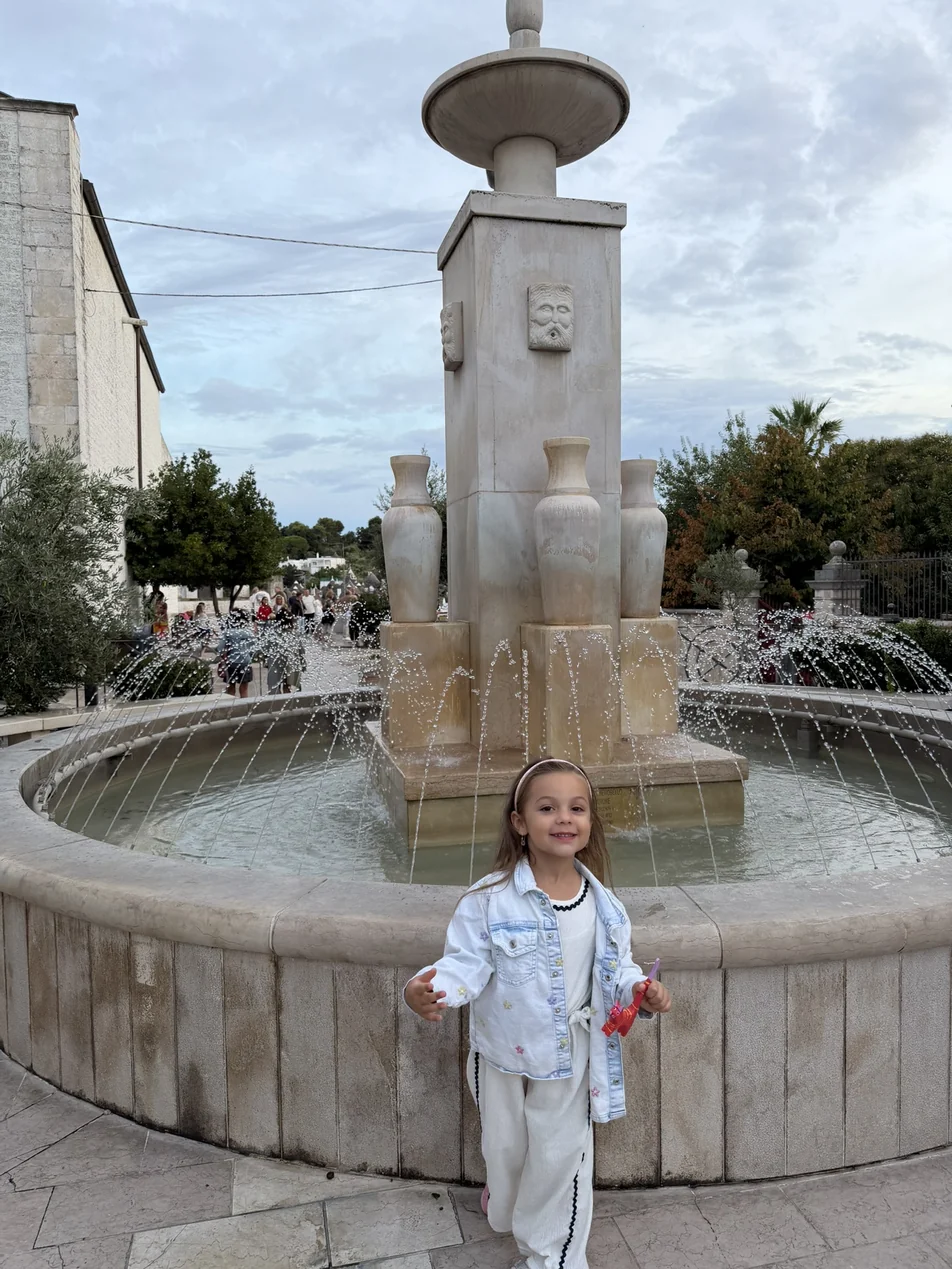
Between the two trulli districts the town flattens out into ordinary squares, and they are where Alberobello stops performing for a moment. One has a round pool with a small fountain in it and rows of hard-clipped trees for shade, with benches underneath and people actually sitting on them. Another holds a tall carved stone fountain with basins running down it.
They are not sights. They are the bit in the middle where you buy a cold drink, let a child run about on something that is not cobbles, and work out which hill to climb next — and after an hour of photographing roofs that turns out to be worth something.
The clipped trees and the pool, 18:40.The carved fountain, 18:43.
What it isThe level ground between the two trulli districts.
Why stopShade, benches, somewhere flat for children.
FreeYes.
We wentFreePhotographed 18:40 and 18:43, 19 September 2026.
Stay for the Blue Hour. This Is the Reason to Sleep Here.
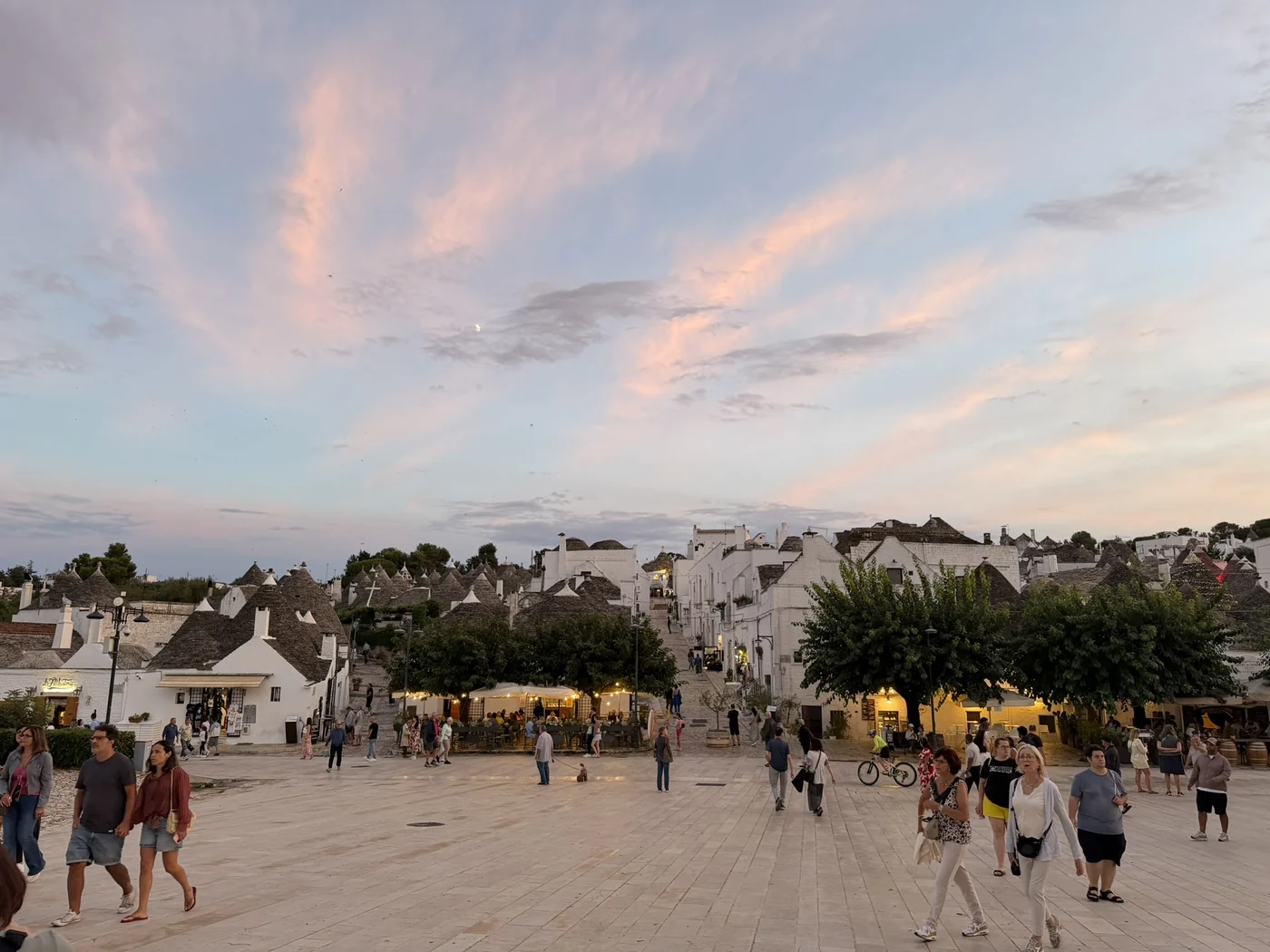
Between about seven and half past seven the town changes completely, and if you came for the day you will miss it. The sun goes down behind the roofs, the sky turns peach and then a deep blue, the lamps come on in the lanes, and the shops that are still open throw colour out onto the white walls.
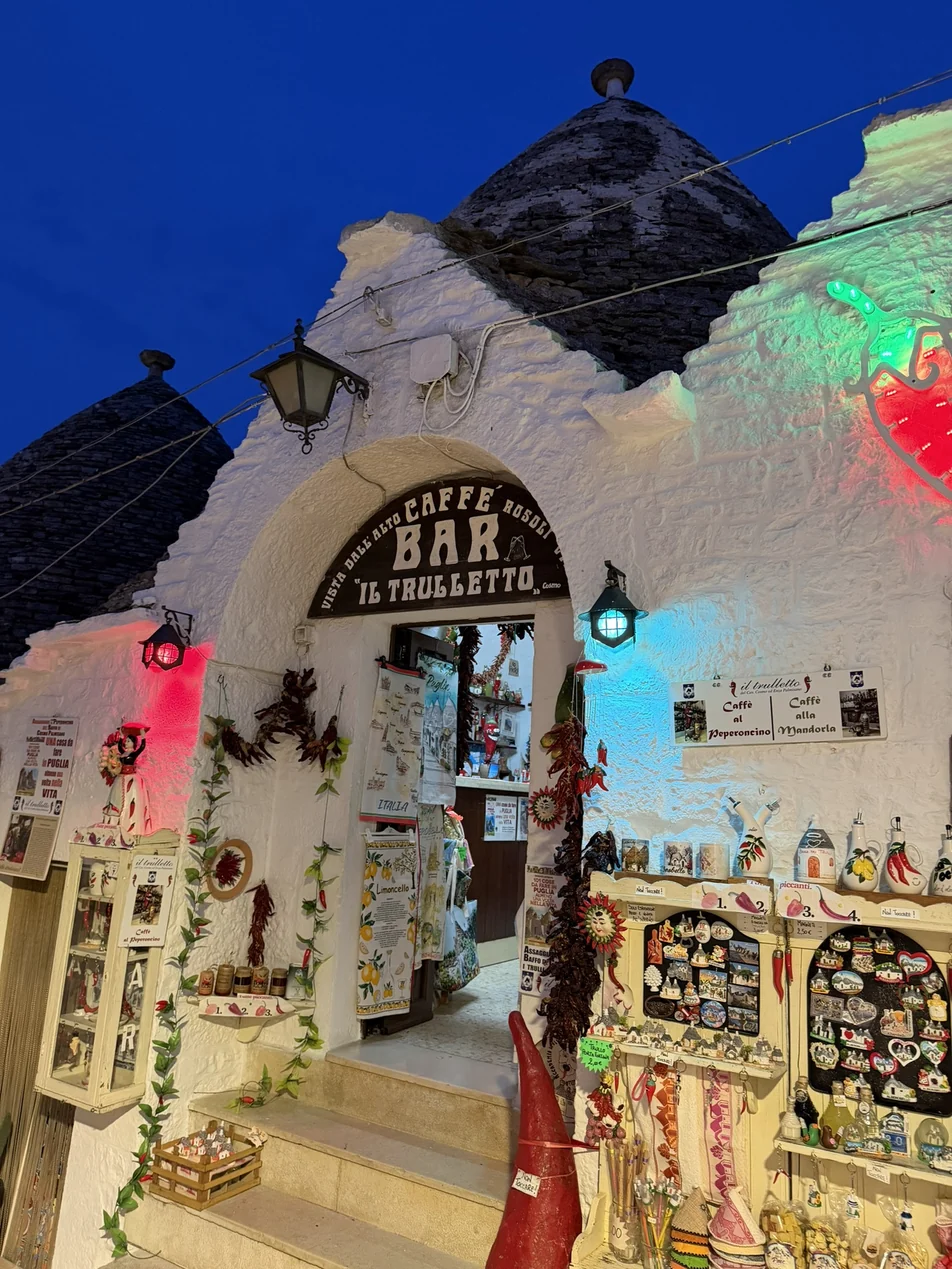
Our photographs from this half hour are the ones we kept. The main piazza at sunset with the roofs stretching away behind it; the lanes at blue hour, lit and almost empty; a trullo bar glowing red and green under its cone. None of it required getting up early or booking anything. It required being in the town at seven in the evening, which is the one thing a coach trip cannot do.
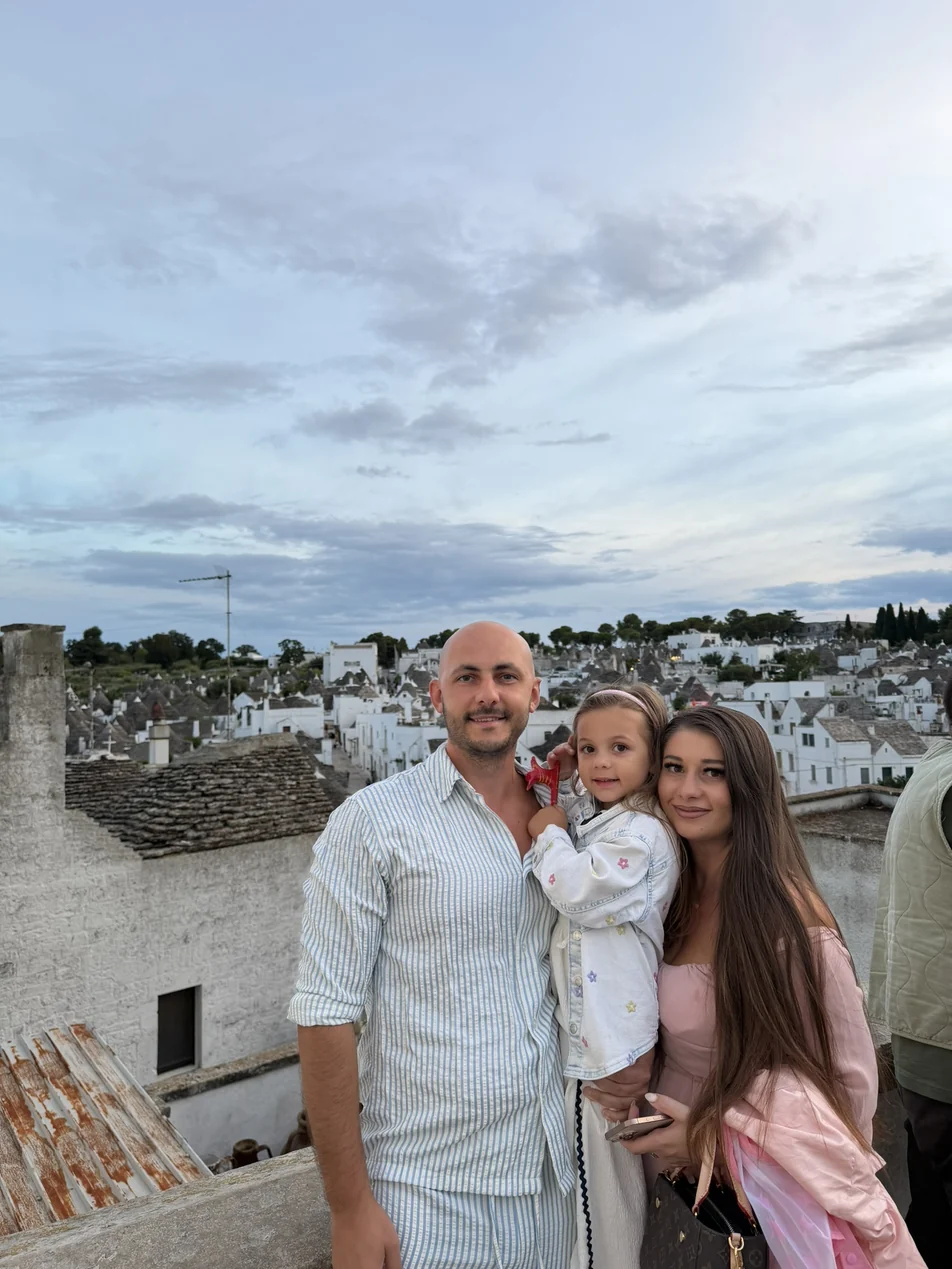
Above the roofs at 18:48.The piazza at 18:59.
The blue hour at 19:10.Caffè Bar Il Trulletto under its cone, 19:17.
WhenRoughly 18:45 to 19:30 in late September.
Where to beThe main piazza for sunset, then the lanes of Rione Monti.
Why it mattersThe coaches have gone and the lamps are on.
CostNothing.
We wentFreePhotographed 18:48–19:17, 19 September 2026.
Coppino: Homemade Pasta, Out of a Paper Bowl
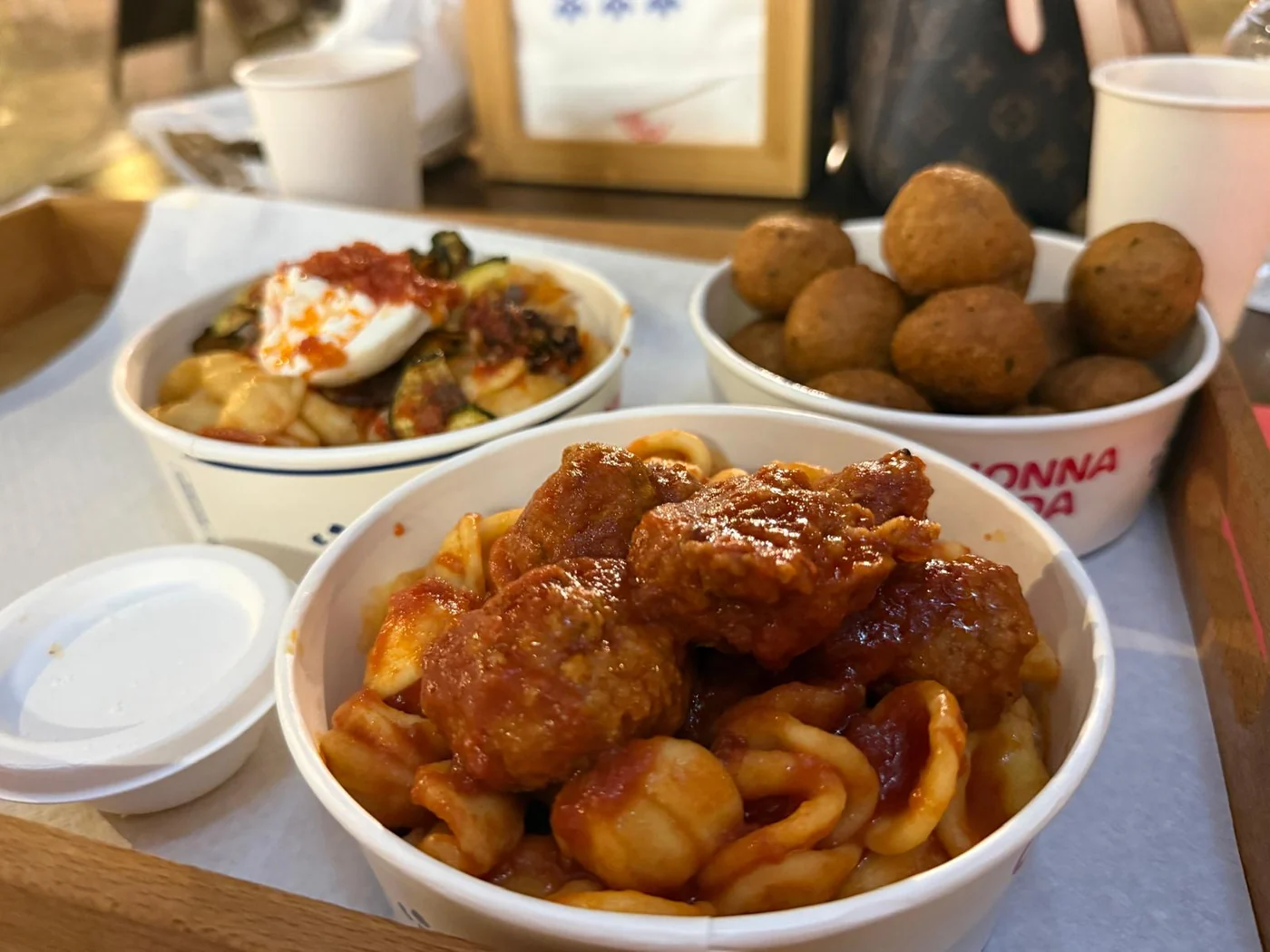
We ate at Coppino Alberobello, which does homemade pasta to eat there or carry away, served in paper bowls on a wooden tray. It is the opposite of a long sit-down dinner and in a town where you want to be outside at sunset, that turns out to be exactly right.
Between us: orecchiette with meatballs in tomato, the Puglian default and the thing to order if you only order one; orecchiette with courgette, tomato and a round of soft cheese melting into the middle of it; and a bowl of fried polpette alongside. All of it hand-shaped pasta, none of it expensive, and no part of the evening spent waiting for a table.
Dinner at Coppino — orecchiette two ways and a bowl of polpette.
WhereCoppino Alberobello — Homemade pasta, in the centre.
What to orderOrecchiette with meatballs. Add the polpette.
Why it suits the townQuick, and it leaves you the sunset hour.
We ate hereOur own dinner, 19 September 2026.
On the ground
Parking, Timing and How Long to Stay
Alberobello is inland, in the Valle d'Itria, about fifty minutes from Bari airport and well under an hour from the coast at Polignano or Monopoli. We drove, and a car is the sensible way to reach it.
Do not drive into the trulli districts. The lanes are narrow, cobbled, steep and in places restricted. Park on the edge of the centre and walk in — everything worth seeing is within fifteen minutes on foot of everything else.
One night is the right amount. An evening and a morning covers the town without padding. What one night buys you that a day trip cannot is the hour after the coaches leave, and that hour is the best of it.
Wear something sensible on your feet. The lanes are cobbled and steep in both districts, and they are slippery when wet.
Questions
Alberobello FAQ
Is Alberobello worth staying overnight, or is a day trip enough?
Stay. The town fills with coach parties through the middle of the day and empties in the evening, and the evening is when it is worth photographing. We paid €140.40 for one night in a trullo.
What is a trullo?
A dry-stone house with a conical limestone roof, built without a drop of mortar. UNESCO calls the method corbelled dry-stone construction — each ring of stone laid slightly inside the one below until the cone closes itself at the top — and describes it as a prehistoric building technique still in use in this region.
The walls are two skins of roughly worked limestone with a rubble core, whitewashed with lime. The roof is two layers: an inner dome of wedge-shaped stones, and over it an outer cone of flat slabs called chiancarelle, overlapped so the rain runs off. The stone came from the ground the house stands on — cleared off the fields, and dug out while excavating the cistern underneath it. The pinnacle on top was the mark of the trullaro who built it.
Alberobello's two quarters hold 1,030 trulli in Rione Monti and 590 in Rione Aia Piccola, and the town is a UNESCO World Heritage Site because of them (UNESCO).
Why were trulli built without mortar?
There are two answers, and they are not the same kind of answer.
The practical one. This is karst country and the limestone is everywhere — in the fields, under the floor, in the way. A farmer clearing a plot ended up with the walls of his house as a by-product. With stone alone and no timber, a self-supporting cone is the simplest roof you can raise, and thick double walls with a rubble core keep the inside cool through a Puglian summer. UNESCO places the technique in a Mediterranean dry-stone tradition several thousand years old.
The famous one: that it was a tax dodge. The story goes that under the Prammatica de Baronibus, a fifteenth-century Neapolitan edict taxing every new settlement, the Counts of Conversano required that houses here be built dry, so that a dwelling could be pulled apart before a royal inspection and the settlement counted as nothing. A second version of the same story puts it in 1635 under Count Giangirolamo II, dodging tax owed to the Spanish Viceroy.
Treat the second one as a good story rather than a settled fact. The accounts that tell it do not agree on the century, and do not say whether it is documented or handed down — and UNESCO's own description of the site does not mention it at all. What is on the record is that Alberobello stayed a fief of the Acquaviva counts until 27 May 1797, when Ferdinand IV made it a royal city and the town stopped being anyone's private property (Wikipedia).
Can you go inside one?
Yes — most of the trulli on the main lanes are now shops you can walk straight into, and you can rent one to sleep in, which is what we did.
How long do you need?
An evening and a morning. The two trulli districts, the two churches and the squares between them are all within a short walk.
Is it good with children?
Yes, with the caveat that it is steep cobbles throughout. The squares in the middle are flat and have shade and benches.