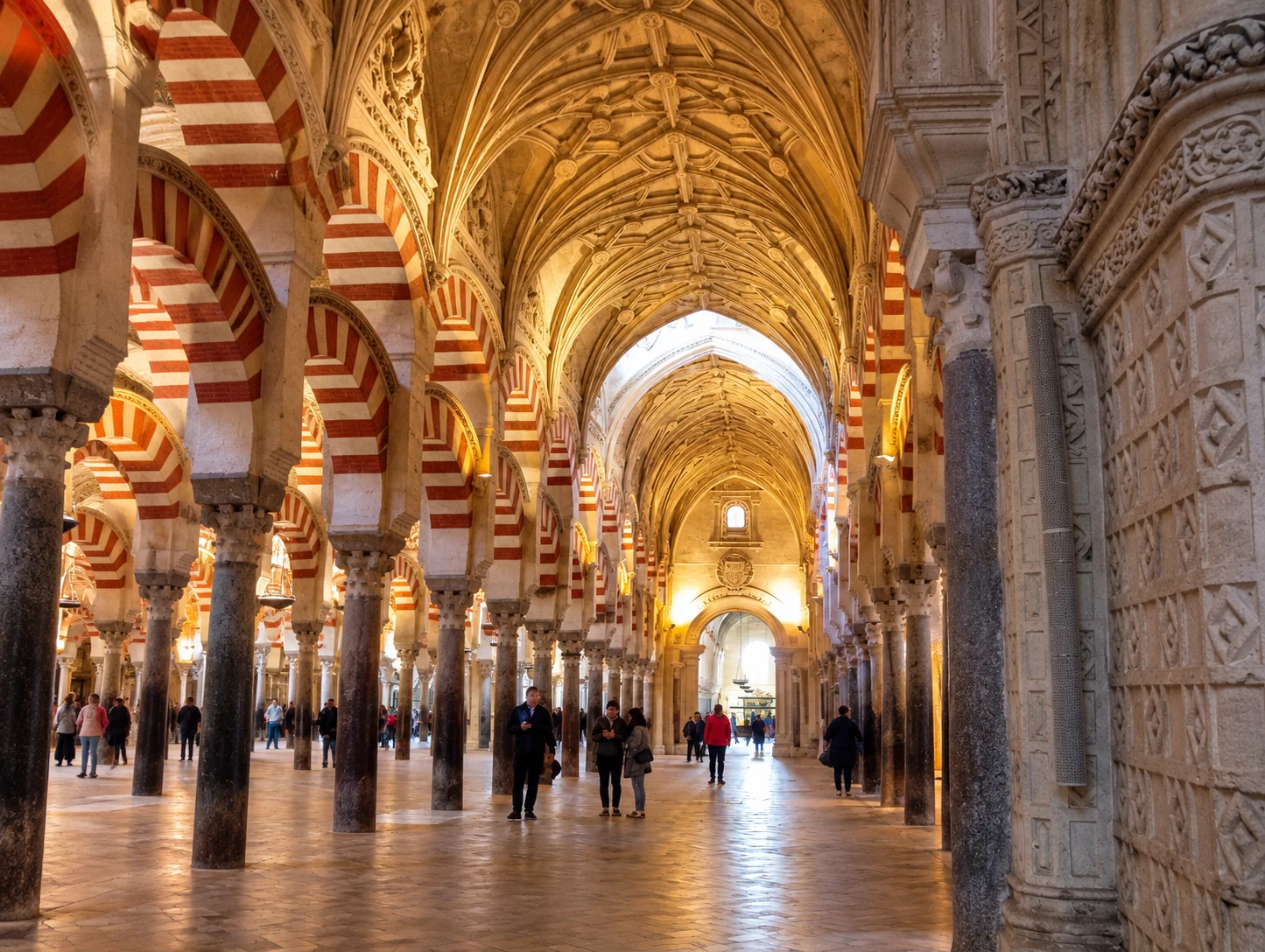
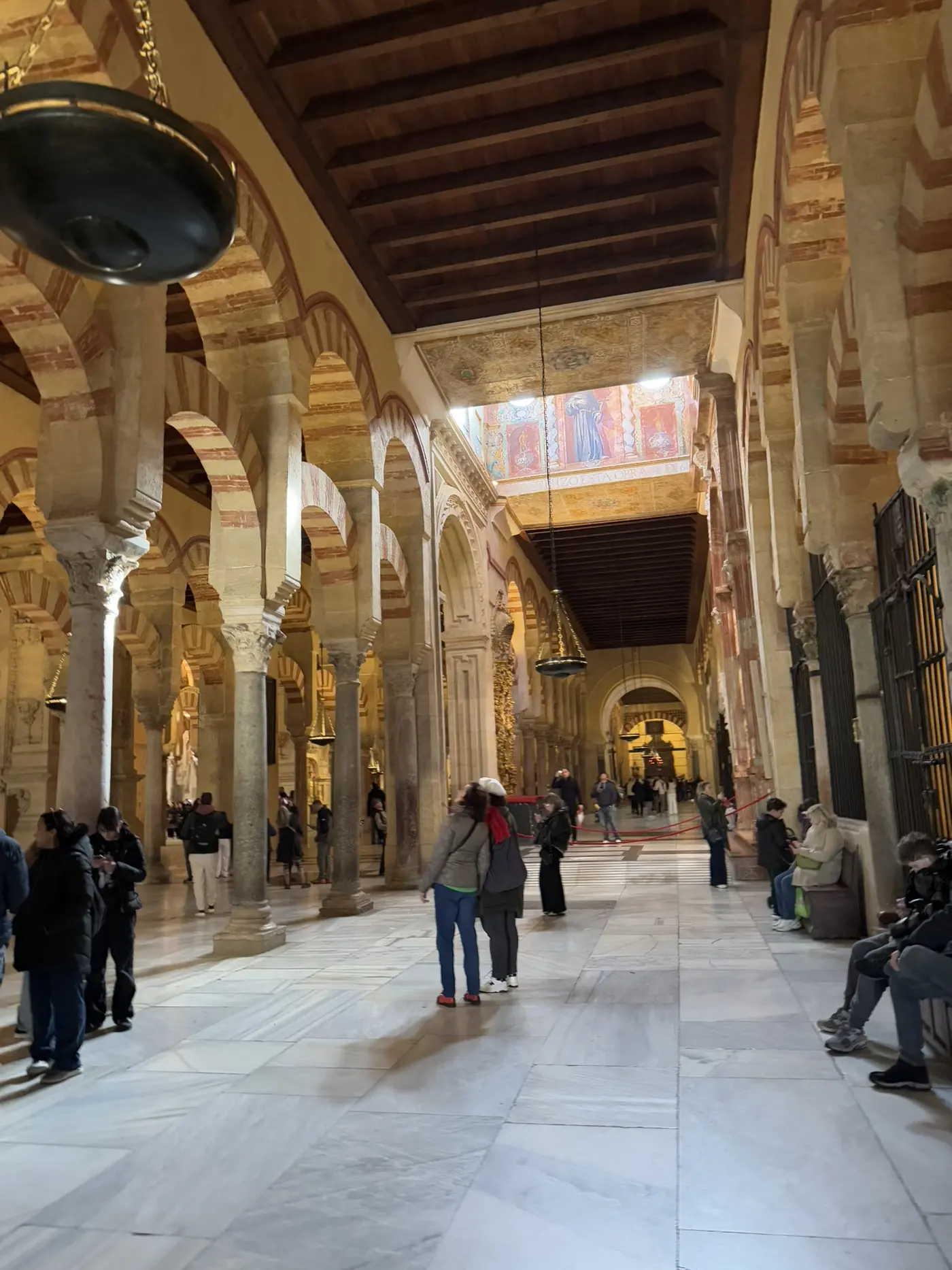
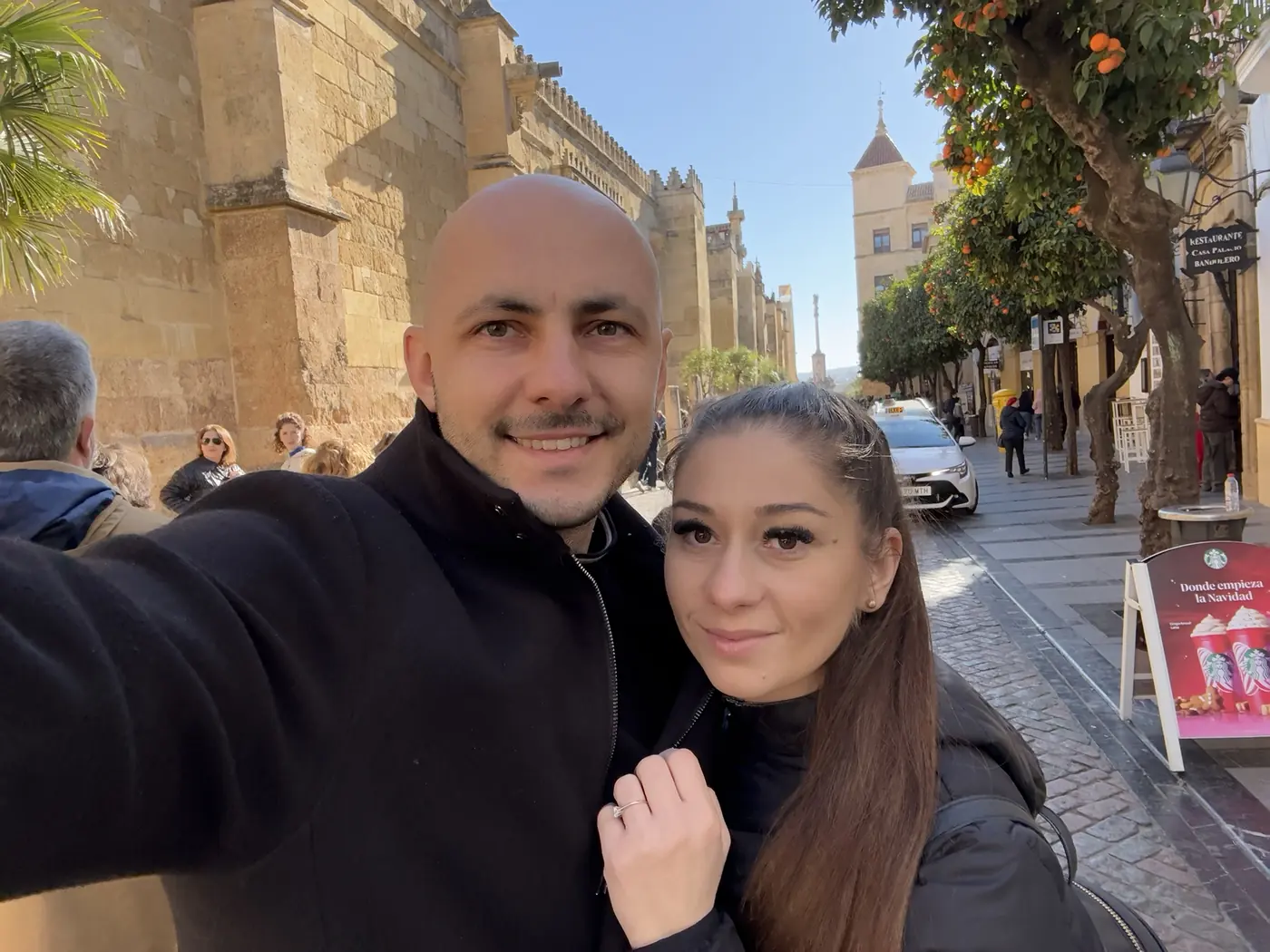
A thousand columns in the Mezquita, the flower alleys, and the Roman bridge after dark.
VisitedYes — in person
Trip dates26 December 2024 – 4 January 2025
Prices last verifiedSeptember 2026
Sights covered7
Visited 30 December 2024Prices & hours checked September 2026Written from our own tickets, photos and notes
Córdoba in short
One full day is enough for the Mezquita, the Alcázar, the Judería and the Roman bridge. Two if you want the patios and the museums.
The Mezquita is free 08:30–09:30, Monday to Saturday. No booking, no queue in winter, and the building is nearly empty. This is the single best hour in Andalusia.
Don't come on a Monday if you want the Alcázar — it closes. We did, and we didn't get in.
45 minutes from Seville by high-speed train, which makes Córdoba the easiest day trip in the region.
Budget €13–21 per person for the Mezquita and Alcázar, or €5 if you use the free morning hour.
On this page
The one thing to get right. Córdoba's whole day pivots on the Mezquita's free morning hour. Arrive at the Puerta del Perdón by 08:20, walk in at 08:30, and you get the forest of arches with perhaps thirty other people in it. At 11:00 the same room holds coach groups shoulder to shoulder. Everything else on this page can be moved; that hour can't.
Mezquita-Catedral de Córdoba: Hours, Tickets & Best Time to Visit (2026)
Begun in 785, extended four times, and converted into a cathedral after 1236 — which is why a Renaissance nave rises out of the middle of a mosque like a ship surfacing through ice. Nothing else in Europe looks like it. The double horseshoe arches in red brick and white stone were an engineering trick to get height out of short recycled Roman columns, and the effect at eye level is a room that appears to have no edges.
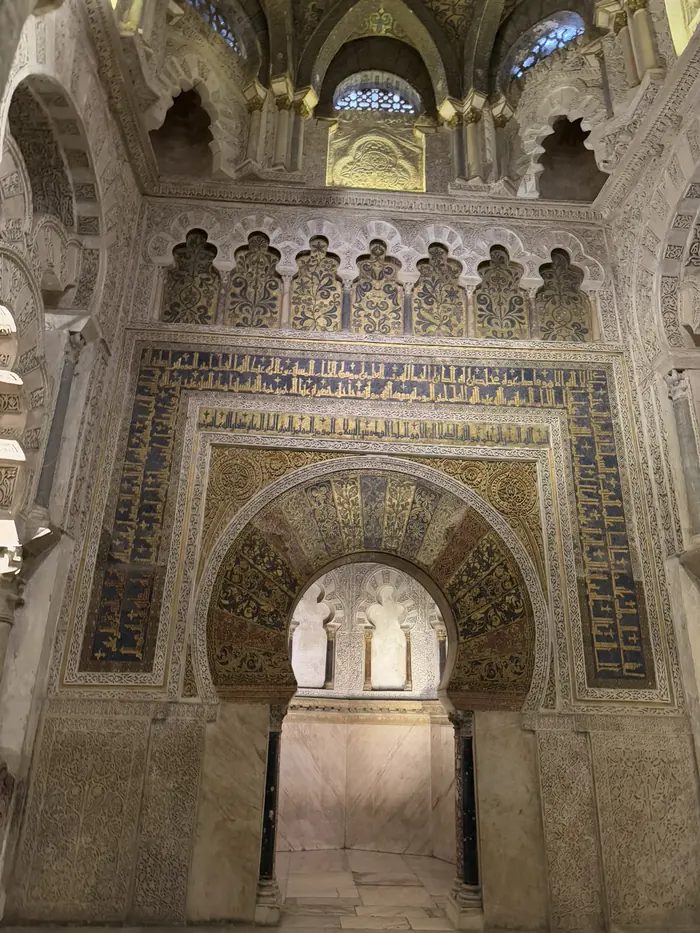
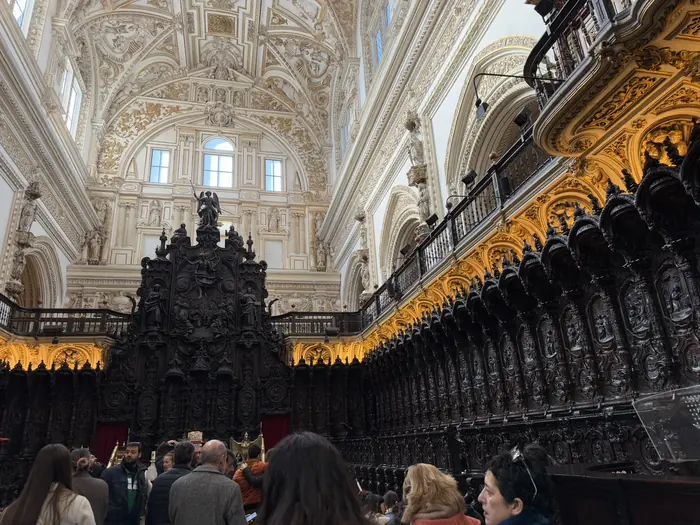
Two things not to miss. The mihrab, at the far south wall, is a gold Byzantine mosaic niche given by the emperor in Constantinople — go there first, before the light through the doors flattens. And the cathedral choir, the mahogany stalls carved in the 1750s, which most people photograph from below without realising they're standing in two buildings at once.
The mihrab. 13:00 — the gold reads differently every ten minutes as the light moves.The cathedral, inside the mosque. 13:25
What the free hour actually is. It's the full building, not a cut-down route — you walk the same floor as the paying visitors. The trade-off is that there's no audio guide and the staff move you along at 09:20 sharp. If you want to linger, use the free hour to see it empty, then buy a ticket and go back in later for the detail.
Want the history explained as you walk Guided Mezquita tours run in English several times a day and skip the ticket-office queue.
Opening hoursRoughly 10:00–18:00 Mon–Sat and Sunday afternoons, with seasonal variation month to month. Last entry 30 minutes before closing. Check the official calendar for your date — this one genuinely changes.
Price€13 general · €10 reduced (65+, students 15–26) · €7 (ages 10–14) · free under 10. The night visit, El Alma de Córdoba, is €20.
Advance bookingWalk-up is usually fine in winter. Book online in spring and at Easter, when the queue at the Puerta del Perdón runs the length of the orange courtyard.
Free entryMon–Sat 08:30–09:30, no booking needed. Access closes at 09:20, so be in the courtyard by 08:20. Excludes major religious celebration days.
Best time08:30, the free hour. Low winter sun comes through the eastern doors and runs down the arcades. Second-best is the last hour before closing.
The Bell Tower: Hours, Price & Whether It's Worth It
The minaret of the old mosque, wrapped in a Renaissance bell tower after an earthquake in 1589 — the same trick Seville pulled with the Giralda, done a few decades later and less gracefully. It's a separate €3 ticket and a timed climb, and the reason to do it is the view straight down into the Patio de los Naranjos and across the roof tiles of the Judería.
Skip it if you're short on time or you've already climbed the Giralda. Do it if you want to understand the shape of the building you've just walked through — from the top the mosque's footprint is suddenly obvious.
Opening hoursTimed slots through the day, roughly every 30 minutes. Closes in high wind.
Price€3, separate from the Mezquita ticket.
Advance bookingBuy on the day at the Mezquita ticket office. Slots are capped at about 20 people.
Best timeLate afternoon. The Judería roofs go orange and the tower's own shadow falls away from the courtyard.
Allow30 minutes including the climb. 54 metres, stairs only.
We went
Alcázar de los Reyes Cristianos: Hours, Tickets & the Monday Closure (2026)
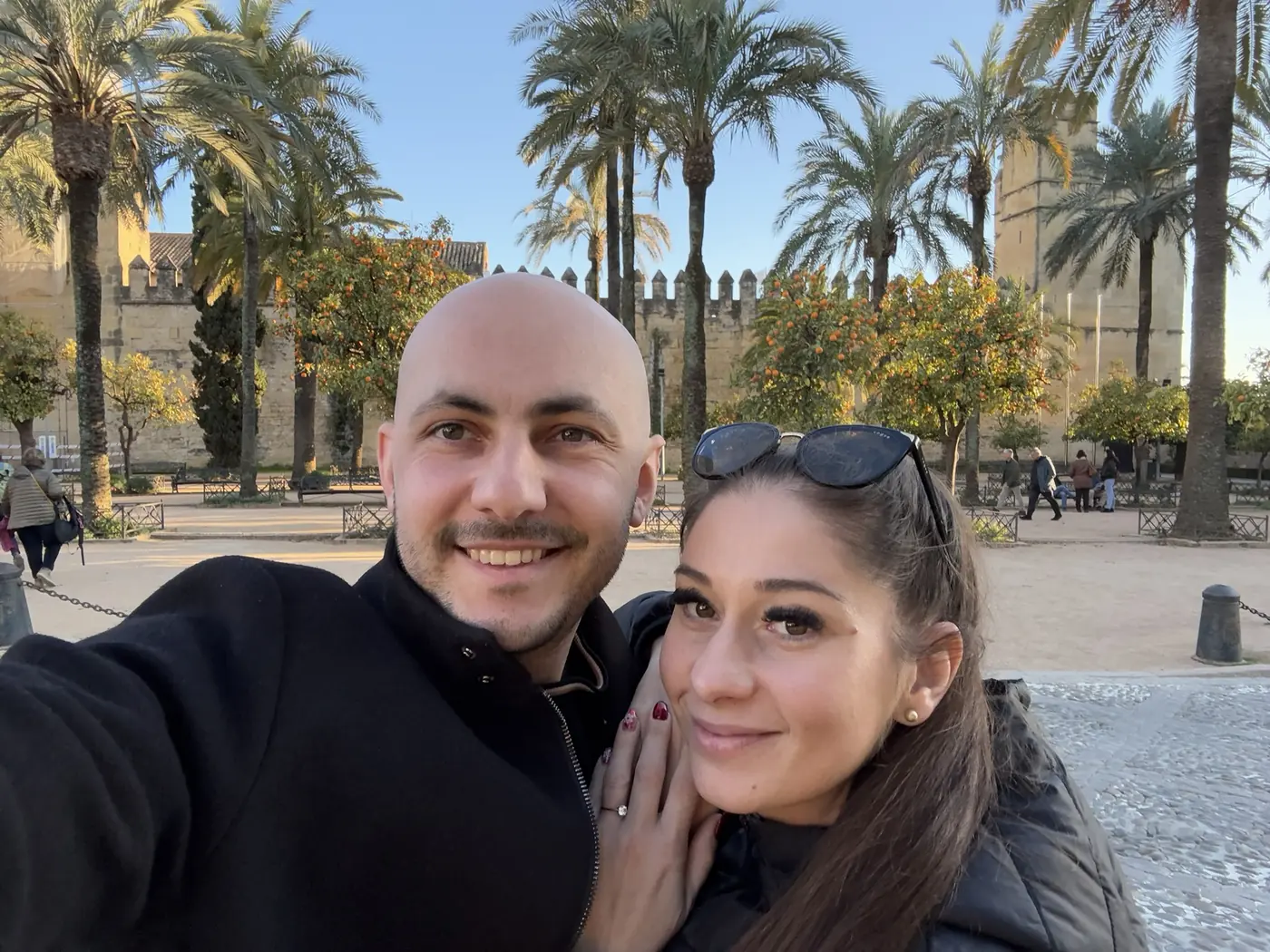
We got this wrong so you don't have to. We were in Córdoba on a Monday. The Alcázar closes on Mondays, all year. We walked the palm avenue outside the walls, took the photo above, and that was the whole visit. If your Córdoba day has to be a Monday, plan the Mezquita and the Judería and treat the Alcázar as a reason to come back.
The fortress-palace where Ferdinand and Isabella held court for eight years, and where they received Christopher Columbus to hear his plan for reaching the Indies by sailing west. It later served as a seat of the Inquisition and, until 1951, as a prison. The building itself is fairly plain; what people come for is the gardens — terraced pools, clipped hedges, orange and cypress, running the full length of the south wall — and the Roman mosaics lifted from under the Plaza de la Corredera.
Opening hoursClosed Mondays, all year. Otherwise roughly 08:15–20:00 in summer and 08:15–18:00 in winter, with shorter Sunday hours. Gardens close with the monument.
Price€5 general · €2.50 students up to 26 · free under 14.
Advance bookingWalk-up outside Easter and the May patio festival.
Free entryA free slot is usually offered on one weekday afternoon — the day moves, so check the municipal site the week you travel.
Best timeFirst thing, or the last 90 minutes. The gardens are the point and they're built around long water; midday flattens them completely.
Allow1–1½ hours, most of it outside.
We wentFree entry
The Judería & Córdoba Synagogue: What We Planned, and Why We Ran Out of Day
We did not get to this one. It was on our plan as the thing to do if the day left us any room, and it did not — one day in Córdoba was already a stretch with the Mezquita, the bell tower and the river, and the Judería is what fell off the end. We are leaving it on the page because the practical detail below is checked and useful, and because the honest version of a one-day itinerary includes the part you did not reach.
The medieval Jewish quarter sits immediately north-west of the Mezquita: a grid of white lanes barely wide enough for two people, with the odd square opening out of nowhere. It is free, it is always open, and by every account it is the part of Córdoba that rewards having no plan — which is exactly what a packed day does not give you.
At its centre is the Sinagoga, built in 1315 and one of only three medieval synagogues left standing in Spain. It is tiny — a single room with Mudéjar plasterwork and Hebrew inscription running around the walls — and takes about ten minutes. Entry is a token fee, free for EU citizens.
The quarter is also where the souvenir density peaks. Walk two streets further from the Mezquita in any direction and the leather shops give way to people's front doors.
If you have one day, decide this in advance. The Mezquita, the bell tower, the Alcázar and the Roman bridge already fill it. Adding the Judería properly means either starting at the free 08:30 Mezquita hour, or accepting that one of the other four gets cut. Pretending all five fit comfortably is how we ended up skipping it.
Opening hoursQuarter: always open. Synagogue: roughly 09:00–21:00 Tue–Sat, mornings only on Sunday, closed Mondays.
PriceQuarter free. Synagogue about €0.30, free for EU citizens.
Best timeBefore 10:00 or after 18:00. The lanes are narrow enough that midday is harsh contrast and nothing else. Evening is when residents are out.
AllowAn hour to wander, plus ten minutes in the synagogue.
Planned, not reachedResearched, not visited — prices and hours checked, the walk is not ours.
Roman Bridge & Torre de la Calahorra: Best Time to Visit
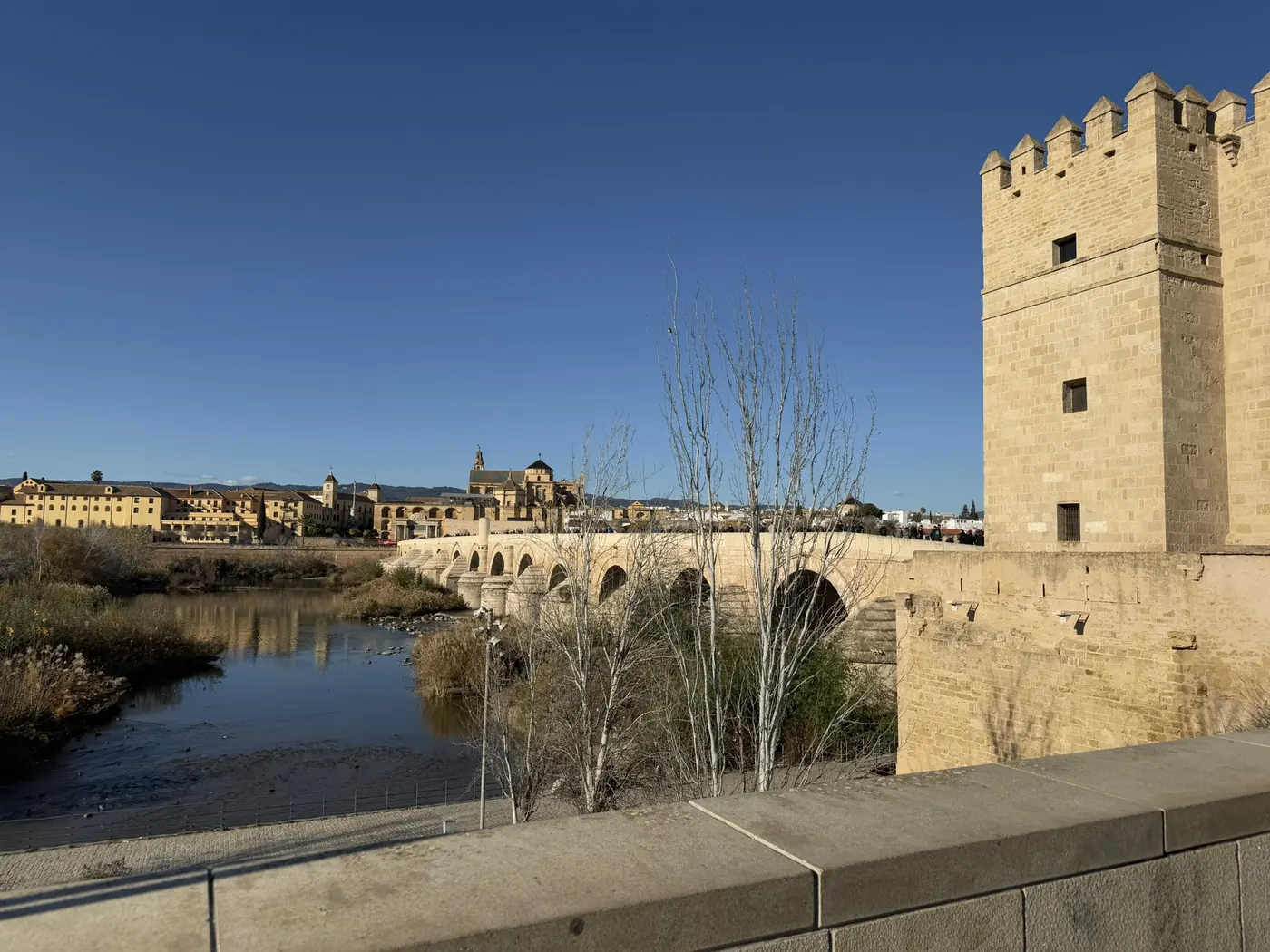
Sixteen arches across the Guadalquivir, Roman in origin and rebuilt so many times that almost nothing original survives above the waterline — but the line of it is two thousand years old, and it is the view of Córdoba. Cross to the far bank and turn around: the Mezquita, the bell tower and the old city wall all stack up behind the bridge in one frame. That's the photo at the top of this page, taken from the Calahorra end at half past three in the afternoon.
The Torre de la Calahorra at the south end is a 12th-century gate tower holding a small museum about the three faiths that shared the city. The museum is dated; the roof terrace is not, and it's the best elevated view of the bridge.
Best timeGolden hour from the south bank, shooting north. Or 30 minutes after sunset, when the bridge and the Mezquita are both floodlit and the river goes black.
Allow20 minutes to cross and look, 45 with the tower.
We went
Calleja de las Flores & Córdoba's Patios: When to Go
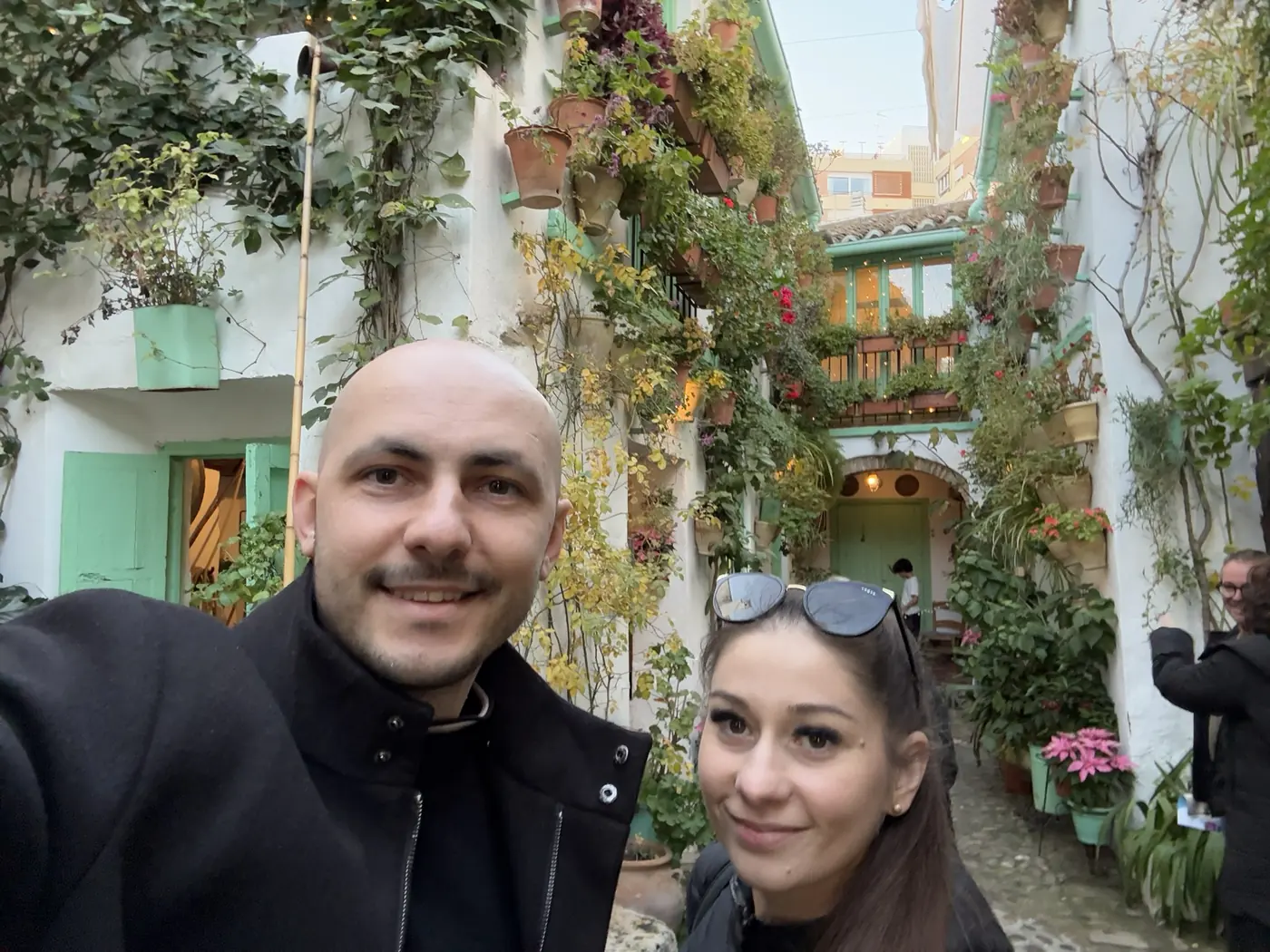
Córdoba's patios are a UNESCO-listed living tradition: interior courtyards hung with hundreds of potted geraniums, watered by hand, opened to the public for two weeks every May during the Festival de los Patios. Come in May and you can walk into dozens of private houses for free. Come in December, as we did, and you get the permanently decorated streets instead — Calleja de las Flores being the famous one, a dead-end alley framing the bell tower at its far end.
It's small, it's always busy, and it takes four minutes. Worth it, but don't build a morning around it. The quieter equivalents are on Calleja del Indiano and around San Basilio, which is also where the best patios open in May.
Opening hoursStreets always open. The Festival de los Patios runs for two weeks in early May; a handful of patios also open year-round for a few euros.
PriceFree during the festival and on the streets.
Best timeLate afternoon. The alley runs north and only gets indirect light — which is what makes the whites read properly rather than blowing out.
Allow10 minutes for the alley; a full morning in May.
We wentFree entry
Plaza de las Tendillas: Córdoba After Dark
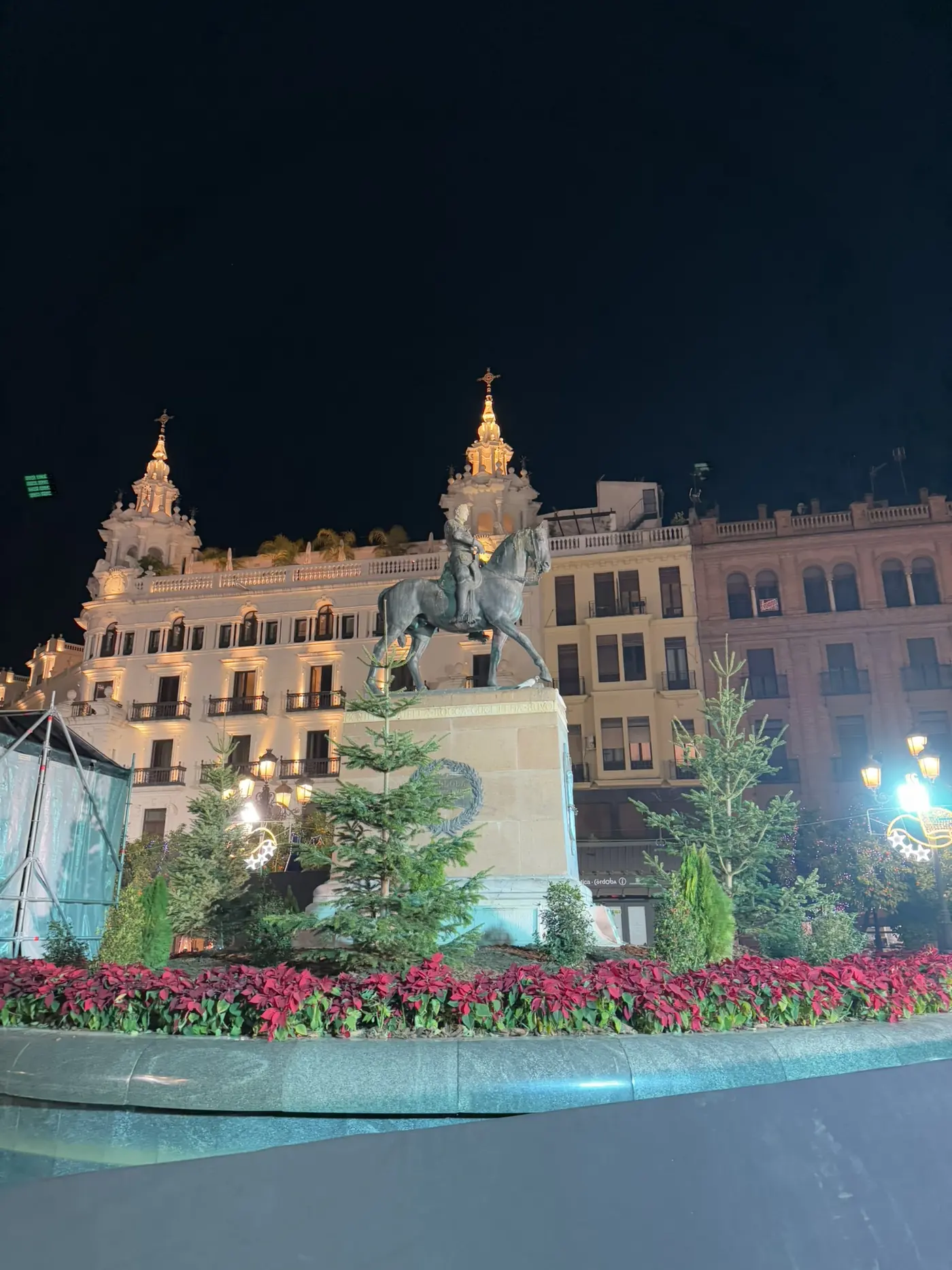
The modern centre of the city, ten minutes north of the Mezquita and a different Córdoba entirely — wide, open, and full of locals rather than day-trippers. The equestrian statue is the Gran Capitán, and the clock on the corner building marks the hours with a recorded flamenco guitar phrase, which is exactly as odd as it sounds.
This is where the evening happens. Day-trippers leave on the late-afternoon trains, and after about 20:00 the old town empties out while Tendillas and the streets north of it fill up. If you're staying the night in Córdoba rather than day-tripping, this is the payoff.
Opening hoursAlways open. Bars around it run late; kitchens from about 20:30.
PriceFree
Best timeAfter dark, and in December. The Christmas lighting across Tendillas and Cruz Conde is one of the better displays in Andalusia.
AllowAn evening.
We wentFree entry
Eating in Córdoba: Salmorejo, Lunch by the Mezquita and the Queue Problem
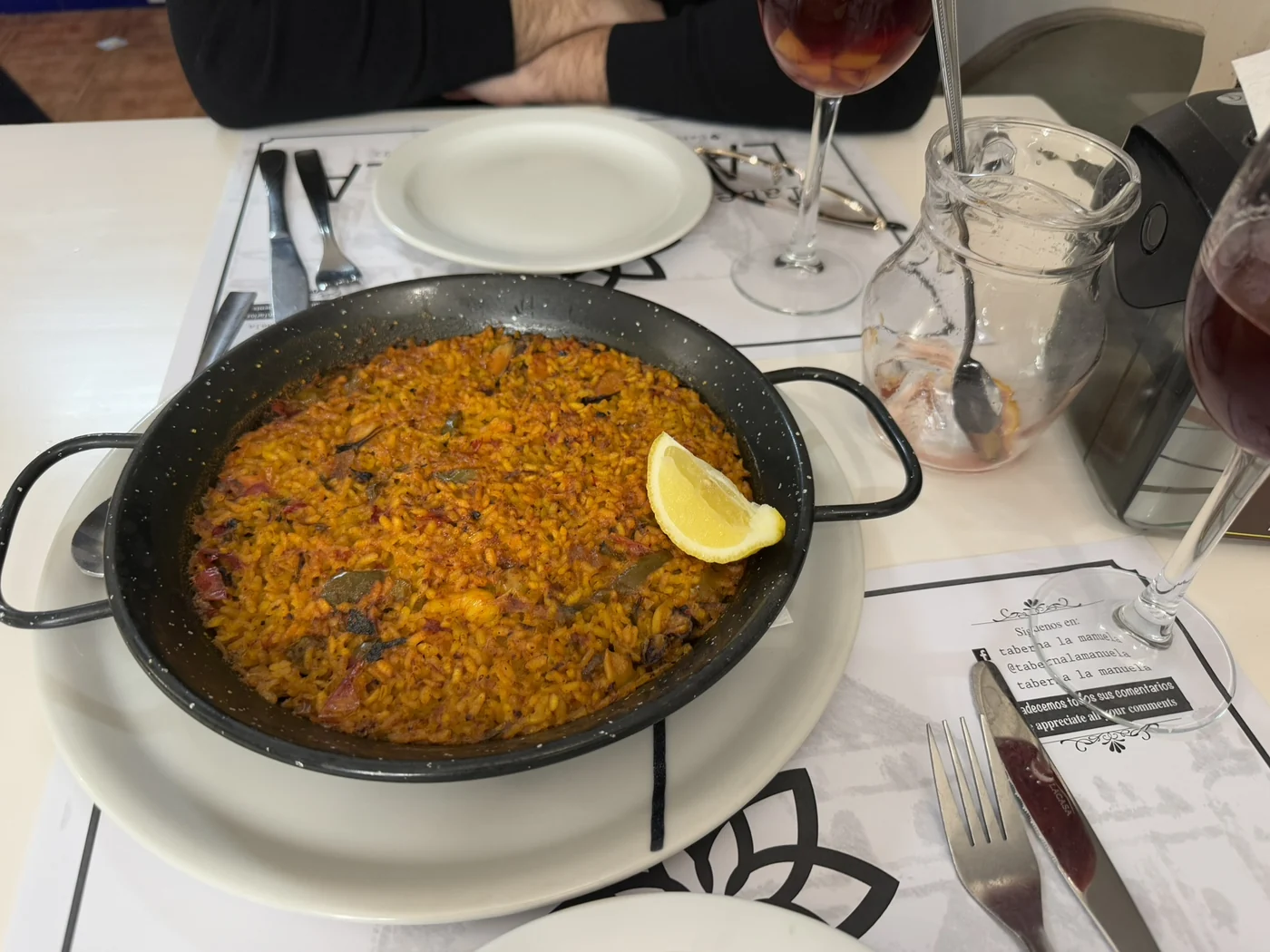
We ate twice in Córdoba on 30 December — paella for a late lunch at Taberna La Manuela, C. Cardenal González 69, a few streets from the Mezquita, and dinner that night at Taberna El Capricho, C. Velázquez Bosco 8, in the old town. Both are traditional tabernas, and Google puts both at around €10–20 a head.
What we can pass on is the method, because it is the part that transfers. We look for the places with good prices and good reviews — and the honest footnote is that those are exactly the places with a queue outside them. In Córdoba's old town that is not a coincidence or bad luck. It is the market working: a small kitchen, a short menu, a fair bill, and more people wanting a table than there are tables. If a restaurant two doors down the same lane is empty at 21:30, there is usually a reason.
So plan for the wait rather than around it. Either put your name down and spend twenty minutes walking the lane, or eat at the hours the queue is not there — a late lunch at 16:00 instead of 14:00, or dinner at 21:00 rather than 22:00. We did both without booking anything and ate well twice.
What we ate
Late lunch at Taberna La Manuela, 16:06 — paella and a sangria, which is the standard post-monument meal everywhere in Andalusia.
Salmorejo is Córdoba's own dish and the thing to order here. It looks like gazpacho and is not: thicker, made of tomato, bread, olive oil and garlic with no cucumber or pepper in it, served cold in a bowl rather than a glass, and finished with chopped jamón and grated hard-boiled egg. It is a starter in winter as much as in summer, and ours came exactly as above.
Fried aubergine with cane syrup — berenjenas con miel de caña — is the other plate that turns up on practically every taberna menu in the city. Batter, salt and a dark sweet drizzle, and better than that description makes it sound.
The one we missed:rabo de toro, oxtail stewed until it falls off the bone, is the dish Córdoba is most known for. We did not order it, so we cannot tell you where to have it — only that if you have one dinner here and you eat meat, that is the gap in our day worth filling.
Where we ateLunch: Taberna La Manuela, C. Cardenal González 69. Dinner: Taberna El Capricho, C. Velázquez Bosco 8.
What it costWe kept no receipts, so we are not printing a figure. For scale, Córdoba was the cheapest of the four Andalusian cities we ate in.
Advance bookingWe booked neither. Worth it for dinner at a weekend; otherwise expect to wait at the places you actually want.
Best timeSpanish lunch runs 14:00–16:00 and dinner starts around 21:00. Arriving at 19:00 gets you a tourist menu.
AllowAn hour and a half, plus the queue. Nobody rushes you and nobody brings the bill unasked.
Order thisSalmorejo, berenjenas con miel, and rabo de toro if you eat meat.
We ate hereNo official source — these are our own two meals.
Real numbers
What a day in Córdoba costs
Ticket
2026 price
Note
Mezquita-Catedral
€13.00
Or free, 08:30–09:30 Mon–Sat
Bell tower
€3.00
Separate timed ticket
Alcázar de los Reyes Cristianos
€5.00
Closed Mondays
Synagogue
€0.30
Free for EU citizens — we did not get there
Torre de la Calahorra
€4.50
Optional; the terrace is the reason
Everything, per person
€25.80
€12.80 if you use the free morning hour
Córdoba is the cheapest of the four Andalusian cities we visited by a wide margin — the Mezquita costs less than Seville's cathedral and the Alcázar is a third of the price of Seville's.
Real receipts
Where to Stay in Córdoba: Areas, Prices & Where We Stayed
Córdoba is the cheapest place to sleep on the whole Andalusia route, by a distance. Ours was the single best-value night of the trip.
The argument for staying over rather than day-tripping. €60 buys you two things a day trip can't: the Mezquita's free morning hour before the coaches arrive, and Córdoba in the evening, when the day-trippers have gone and Plaza de las Tendillas fills with locals. At that price it's hard to justify not doing it.
The areas, and who each suits
Area
What it's like
Suits
Typical / night
La Judería
2–5 minutes from the Mezquita. Patio hotels and small apartments. Busy with tour groups by day, quiet after about 18:00.
First-timers, one-nighters, anyone doing the free morning hour
€50–300
San Basilio
South of the Alcázar, residential, and the quarter that wins the most prizes at the May patio festival.
Patio season, and anyone wanting a real neighbourhood
€35–90
Historic centre / Tendillas
The modern heart, ten minutes from the Mezquita. The widest price range in the city and where Córdoba actually eats.
Evenings out, budget stays, longer trips
€40–150
San Pedro / La Corredera
Around the big arcaded square. Tapas bars and nightlife, no tour groups.
Second visits
€45–120
Two exceptions to all of this: May, for the Festival de los Patios, and Semana Santa. Both need booking three to four months ahead and both roughly double the prices above.
Staying the night in Córdoba The Judería is the one to filter for if you want the free 08:30 Mezquita slot without an early train.
Logistics
Getting to Córdoba
From Seville · 45 min
By AVE
High-speed trains run most of the day from Sevilla Santa Justa. This is the easiest day trip in Andalusia — leave at 08:00, be at the Mezquita for the free hour, home for dinner.
From Málaga · 1 hour
By AVE
Also straightforward, and often cheaper booked a few weeks out at renfe.com.
On the road
By car
Don't drive into the old town — it's restricted and the lanes are barely car-width. Park at one of the riverside car parks near the Puente Romano and walk in.
Córdoba's old town is compact enough that everything on this page is within a fifteen-minute walk of the Mezquita. You will not need transport once you're in.
Honest bit
What We'd Change About Our Córdoba Day
We came on a Monday
The Alcázar de los Reyes Cristianos closes on Mondays. So does the Synagogue. We had one day in Córdoba and it was that one — so we walked round the outside of the Alcázar, photographed the walls, and left. The Mezquita stays open, including its free morning hour, so the day was not wasted, but half of what is worth seeing here was shut and none of it had to be.
Do this instead: find the weekly closing days for the whole region before you fix a single date. An itinerary bends around a Monday far more easily than a monument does.
Quick answers
Córdoba FAQ
Is one day enough for Córdoba?
Yes, for the Mezquita, the Alcázar, the Judería and the Roman bridge — that's a comfortable full day with time to eat. Stay the night if you want the city after the day-trippers leave, or if you're coming in May for the patios festival.
When is the Mezquita free?
Monday to Saturday, 08:30–09:30, with no booking required. Access closes at 09:20, so be in the Patio de los Naranjos by 08:20. It's excluded on major religious celebration days. You get the full building, without an audio guide, and you're moved along at 09:20.
What's closed on Mondays in Córdoba?
The Alcázar de los Reyes Cristianos and the Synagogue both close on Mondays. The Mezquita stays open, including its free morning hour. If Monday is your only option, plan around the Mezquita, the Judería streets and the Roman bridge.
Do you need to book the Mezquita in advance?
Not in winter — walk up. From March onwards, and especially during Easter and the May patio festival, book online or use the free morning hour, when the queue moves fastest.
Córdoba or Granada as a day trip from Seville?
Córdoba, without hesitation. It's 45 minutes each way by high-speed train versus around three hours to Granada, and the Mezquita needs no advance booking while the Alhambra needs months. Granada deserves an overnight, not a day trip.
A little more adventure in your inbox.
The newsletter is being set up. Until it opens, write to us and we'll add you to the first send — and we'll answer any question about a trip while we're at it.