Eating in Seville: Tapas, Markets and What to Avoid Buying
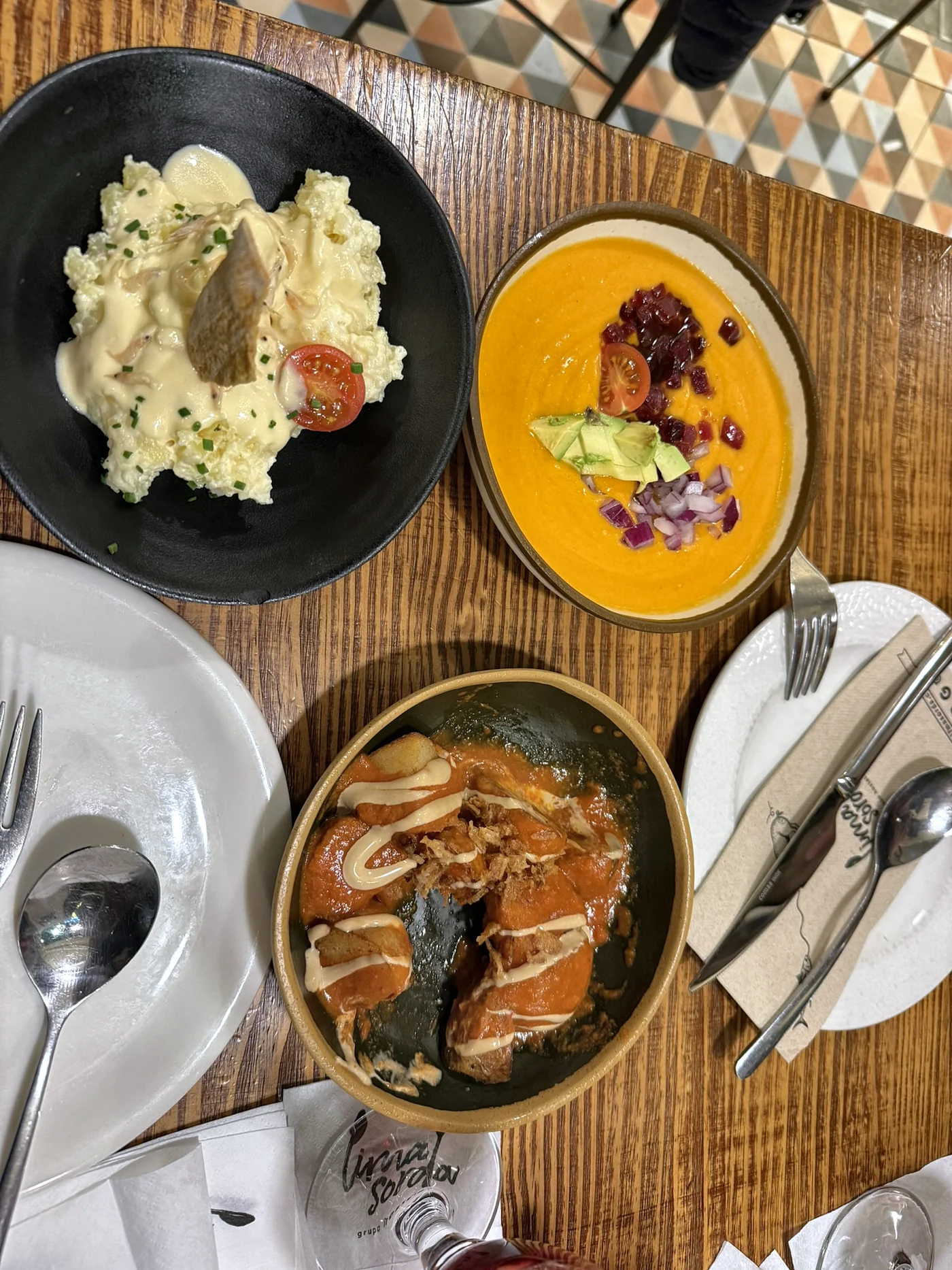
Seville is a tapas city, and that is a structural fact rather than a stylistic one. A tapa is a small plate of one Andalusian dish — salmorejo, spinach with chickpeas, fried fish, pork cheek — and the sensible way to eat is three or four of them between two people rather than a main course each. It costs less, you taste more, and it is how the room around you is eating.
The rule we would give anyone: pick places serving Andalusian food, not international menus. The giveaway is a menu in six languages with photographs on it. The places worth your evening have a short handwritten list, a bar you can stand at, and a crowd that is mostly local.
Where we ate, and what it was like
Casa de Manolo — we went twice, which is the strongest recommendation we can make with four nights in a city. The food was excellent and the bill came in below the Seville average, which is an unusual combination anywhere near the centre.
100 Montaditos — a Spanish chain, and a useful one. The menu is dozens of montaditos, small filled rolls, alongside burgers and craft beer, all at a few euros each. It is fast food rather than a destination, but it solves a late arrival or a cheap lunch without a tourist mark-up.
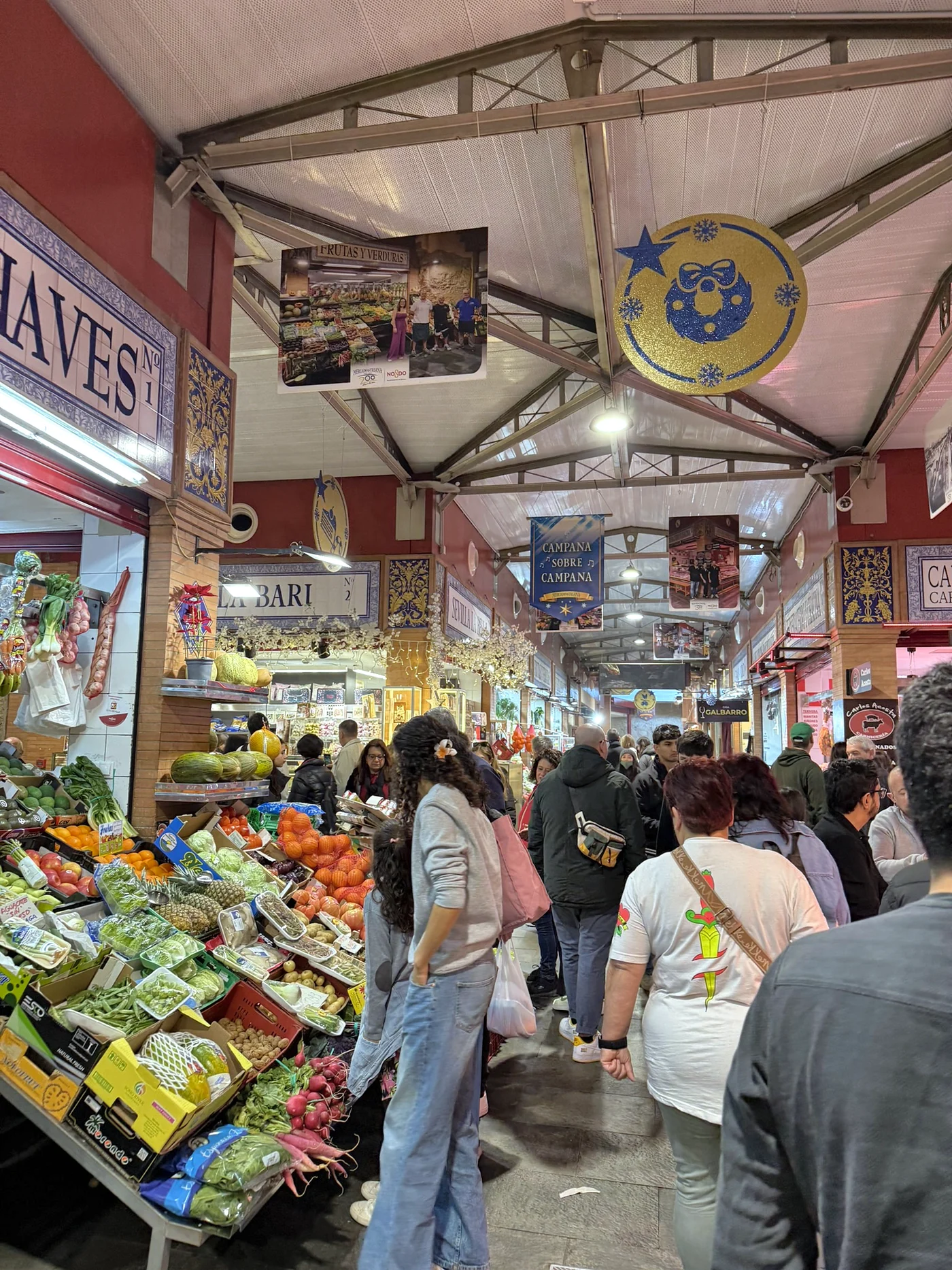
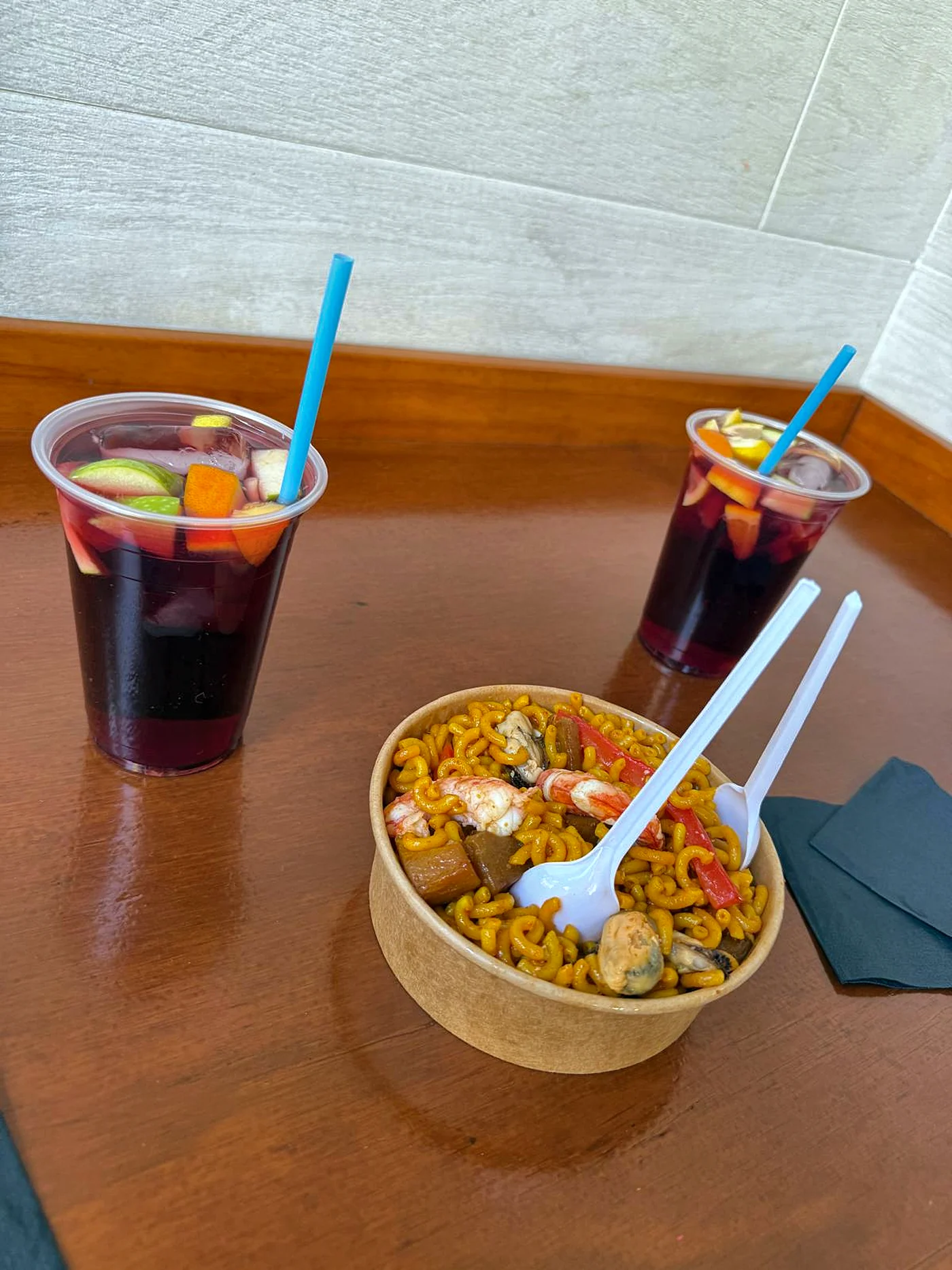
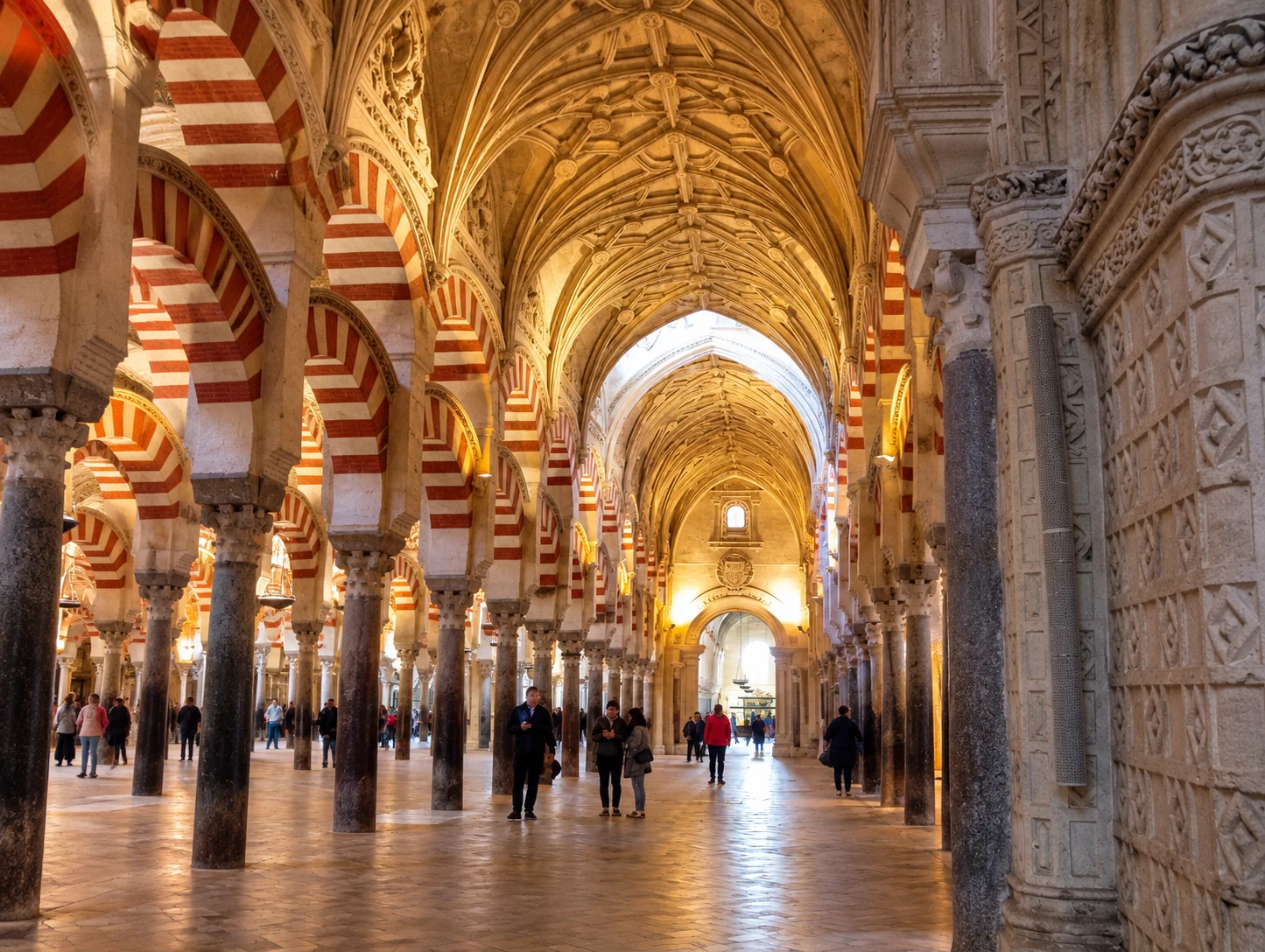
Paella and a glass of sangria is the easy win after a monument. We had it once straight after the Cathedral and again at the Mercado de Triana, both times from a counter rather than a table, both times good. Market counters are consistently better value than restaurants on a tourist square.
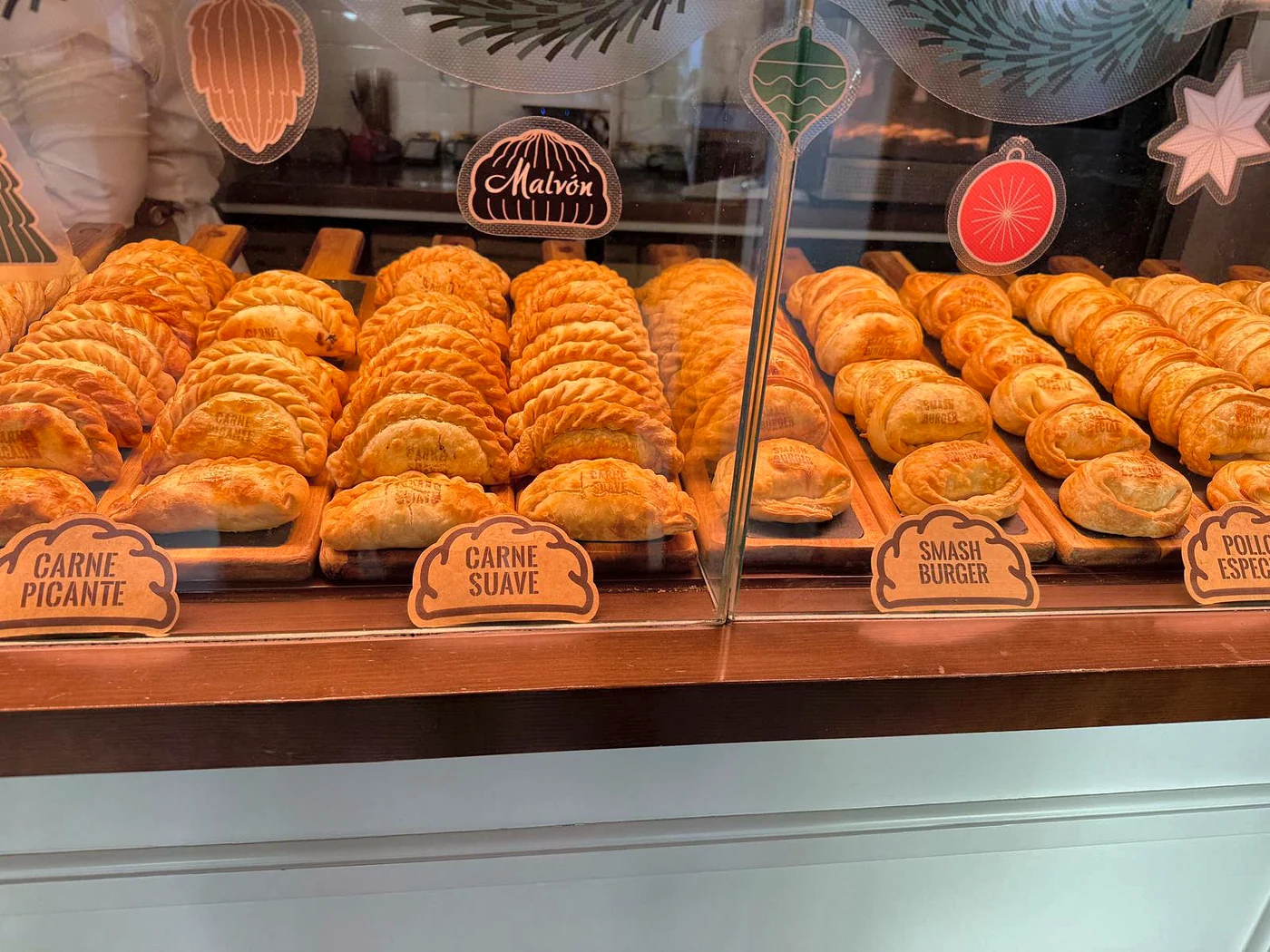
Breakfast was a bakery, every morning, picked by whichever one was on the way to the first sight of the day. There is no need to plan this; Seville has one every few streets and a coffee and something pastry-shaped costs a fraction of a hotel breakfast.
Ice cream: Amorino, beside the Cathedral. The best we had in the city, and worth the short queue.
Three things worth knowing before you buy
Buy jamón at a market, not in a restaurant. Spain's famous cured ham is sold by weight at any covered market, and the same quality costs a fraction of a restaurant plate of it. Buy a hundred grams, eat it on a bench, repeat.
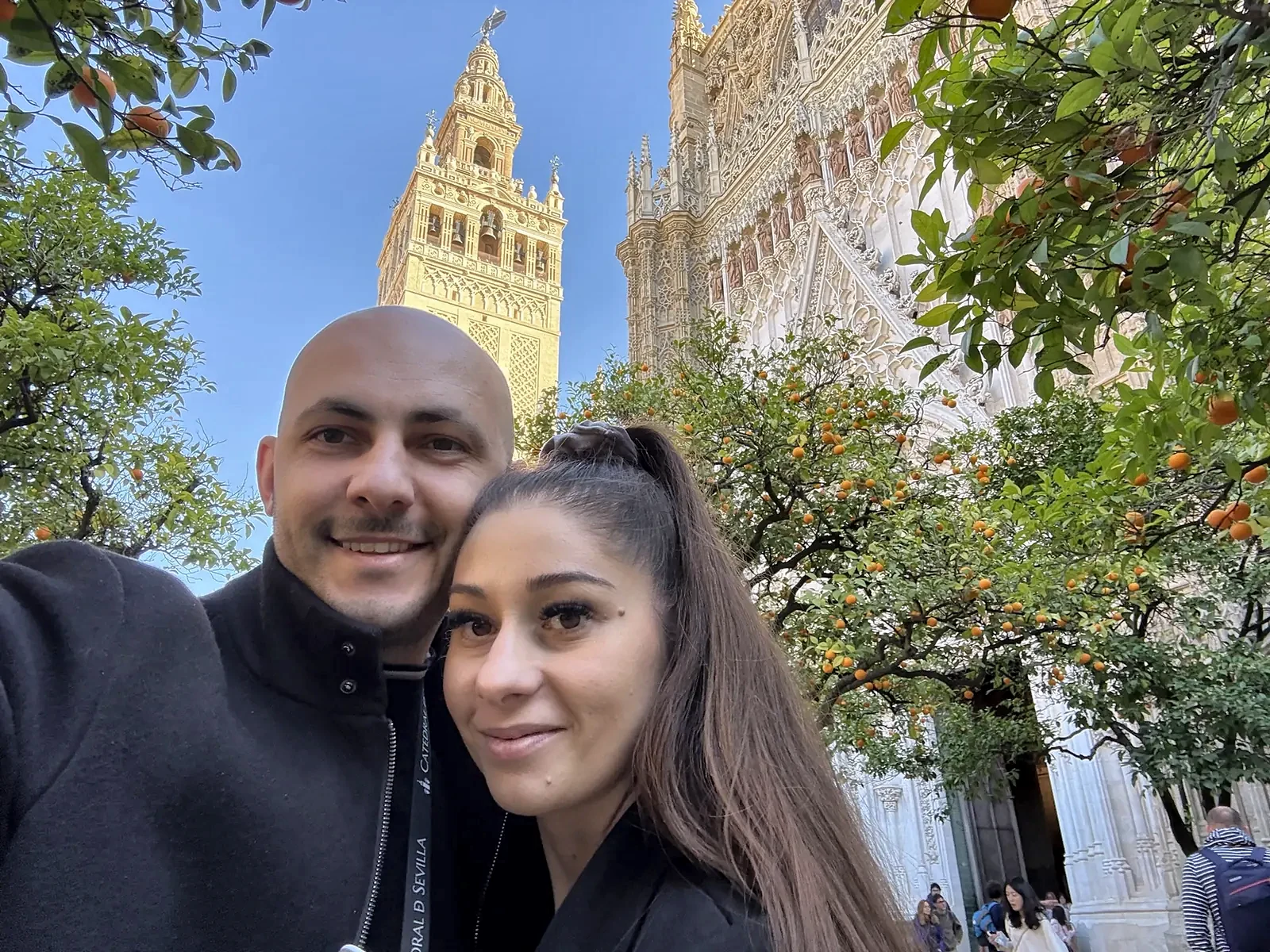
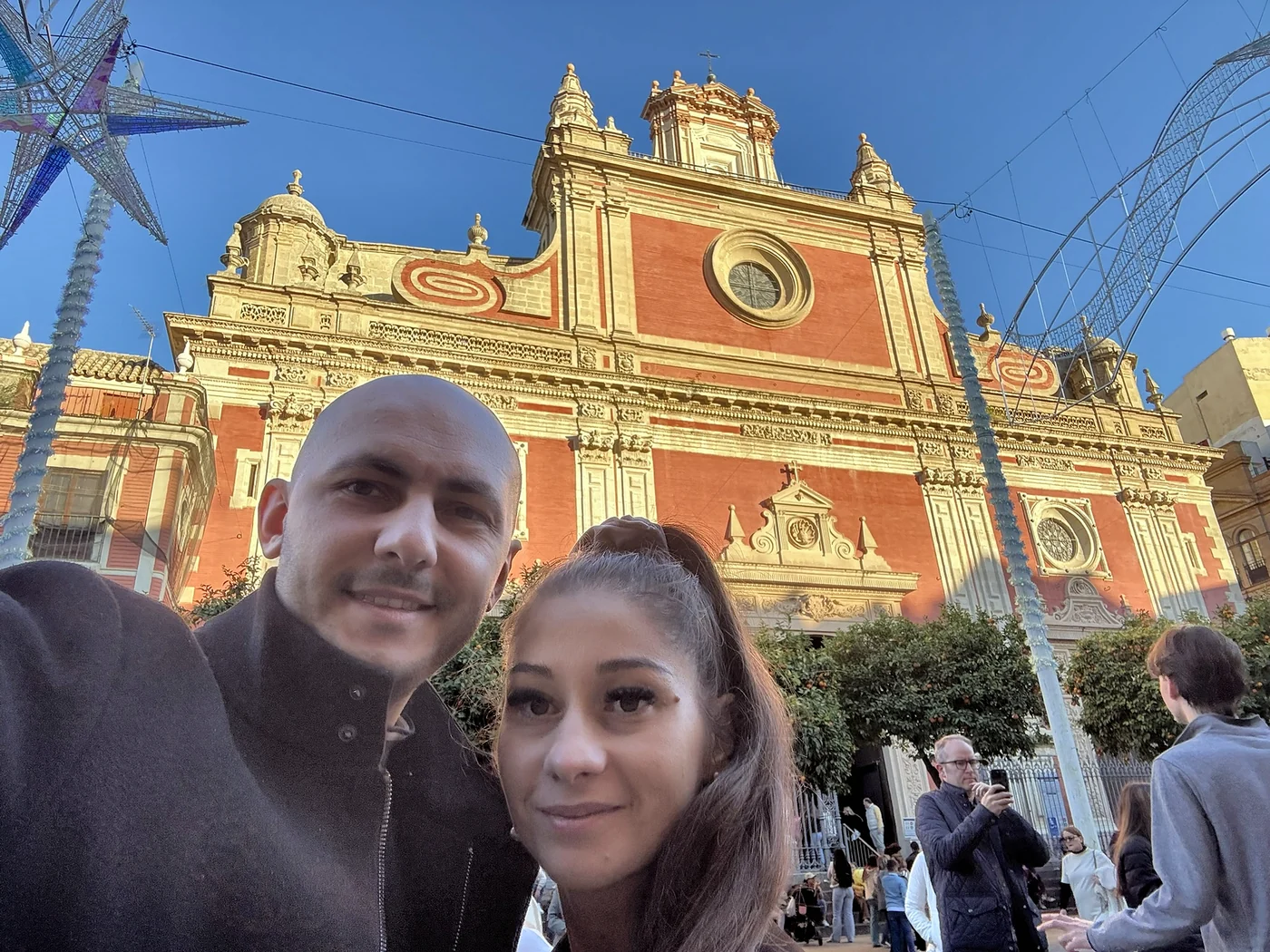
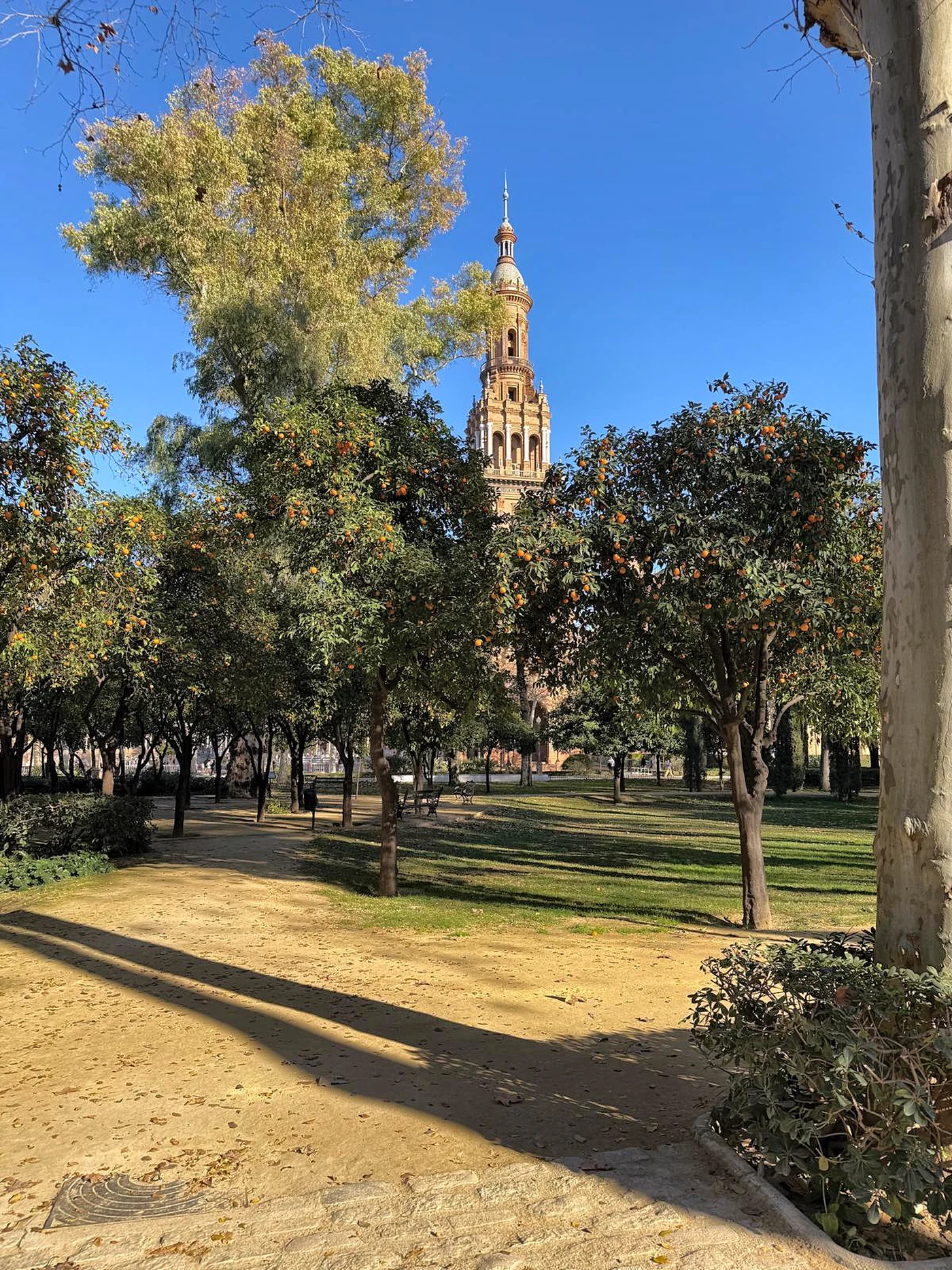
The oranges on the trees are not for eating. Seville's streets are lined with bitter orange trees — the fruit is sharp and inedible raw, which is exactly why it goes into marmalade and liqueur rather than into anyone's hand. They are there for the shade and the scent. Leave them alone.
Check the label before you buy wine in a supermarket. A lot of what sits on those shelves is sweetened or spiced — sangria bases, flavoured reds, cooking wines — and the bottles look much like ordinary wine. If you want a normal bottle, ask someone whether it is a plain still wine before you pay for it.
What it costsWe did not keep our receipts, so we are not printing a total. For scale: tapas run roughly €4–8 a plate in the centre, and three or four plates feed two people.
Advance bookingWorth it for dinner at the weekend. Walk in at lunch.
Best timeSpanish lunch runs 14:00–16:00 and dinner starts around 21:00. Turning up at 19:00 expecting dinner gets you a tourist menu.
AllowAn hour and a half for a sit-down meal. Nobody will rush you, and nobody brings the bill unasked.
Cheapest good mealA market counter — paella, jamón by weight, a glass of something — or a bakery for breakfast.